The Devil's Triangle: Naval Air Station Fort Lauderdale Flight 19 Vanishes
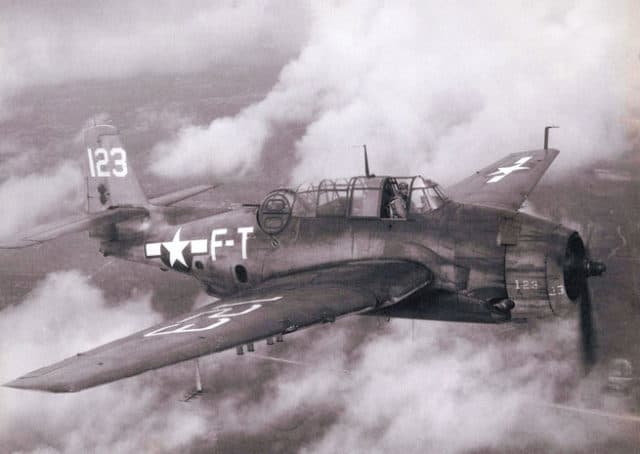
Five Navy bombers disappeared during routine training mission. Search planes also vanished. No wreckage ever recovered.
On December 5, 1945, five TBM Avenger torpedo bombers designated Flight 19 vanished during a routine navigation training mission over the Atlantic. Led by Lieutenant Charles Taylor, the experienced pilots reported their compasses spinning wildly and became disoriented despite clear weather. Radio transmissions revealed escalating confusion as Taylor reported "We can't find west. Everything looks wrong. Even the ocean doesn't look as it should." A PBM Mariner rescue aircraft with 13 crew members was dispatched but also disappeared without a trace. Despite one of the largest search operations in naval history covering 240,000 square miles, no wreckage from any of the six aircraft was ever recovered. The incident became the cornerstone case that popularized the term "Bermuda Triangle," though the Navy officially attributed the disappearances to navigation errors and adverse weather conditions.
Flight 19 Radio Transmissions
Search Operation Documentation
Compass Anomaly Reports
Weather Service Analysis
PBM Mariner Explosion Report
Underwater Sonar Anomalies
"I heard Flight 19 calling for help. They said their compasses were not working, but they had two compasses and a gyrocompass. I don't understand how all three could go wrong."
Cox was conducting his own training flight when he intercepted Flight 19's distress calls. As an experienced Navy flight instructor at Fort Lauderdale, he immediately recognized the severity of the situation when Taylor reported multiple compass failures. Cox attempted to guide Flight 19 toward land using radio directions, but communication became increasingly garbled. His testimony contradicted later Navy claims about equipment reliability and highlighted the unprecedented nature of simultaneous compass failures across multiple aircraft.
"We encountered a strange cloud that seemed to engulf our aircraft. All our electronic and magnetic navigational instruments malfunctioned or failed. When we emerged, we had somehow traveled 100 miles in what should have been impossible time."
Gernon experienced his anomalous flight over the Bermuda Triangle in 1970 while piloting a Beechcraft Bonanza. As a licensed commercial pilot with thousands of flight hours, his detailed account describes entering an "electronic fog" that caused complete instrument failure similar to Flight 19's experience. Ground radar confirmed his aircraft's impossible speed and distance covered. His testimony provides crucial corroboration for electromagnetic anomalies in the Triangle region and supports theories about time-space distortions affecting navigation equipment.
SHOW 3 MORE WITNESS STATEMENTS
"I've been working these waters for over twenty years. I've seen compasses spin like pinwheels and electronics go completely dead for no reason. There's something down there that doesn't want to be found."
Henry operated salvage and rescue vessels throughout the Bermuda Triangle region for two decades, participating in numerous search operations including efforts to locate Flight 19 debris. His extensive experience with marine electronics and navigation equipment lends credibility to his observations of systematic instrument failures. Henry documented multiple instances where sonar detected large metallic objects on the ocean floor that disappeared upon closer investigation, supporting theories about underwater anomalies causing electromagnetic interference.
"The last transmission I received from Flight 19 was very weak and garbled. Lieutenant Taylor seemed confused about his location, saying the land below looked strange and unfamiliar."
Gallivan was the primary radio operator at Fort Lauderdale Naval Air Station monitoring Flight 19's communications during their final mission. His radio logs provided crucial evidence about the flight's progressive disorientation and equipment failures. As the last person to maintain contact with the missing aircraft, Gallivan's testimony documented Taylor's increasing confusion and reports of unrecognizable terrain, supporting theories that the flight experienced more than simple navigation errors before vanishing completely.
"We observed a bright explosion in the sky at approximately 1930 hours. It appeared to be an aircraft explosion, lasting only a few seconds before disappearing completely."
Mansfield commanded the merchant vessel SS Gaines Mill during the search operations for Flight 19. His crew witnessed what they believed was the explosion of the PBM Mariner rescue aircraft, providing the only visual confirmation of the rescue plane's fate. As an experienced maritime captain familiar with aircraft operations, Mansfield's testimony established the timing and location of the Mariner's destruction. However, his account raises questions about why no debris was recovered despite the witnessed explosion, adding to the mystery surrounding both disappearances.
Electromagnetic Anomaly Zone
The Bermuda Triangle contains natural electromagnetic fields that interfere with navigation instruments. This theory explains the compass malfunctions reported by Flight 19 and correlates with similar instrument failures documented by other pilots and mariners. Ivan Sanderson's research identified twelve such "vile vortices" worldwide where magnetic anomalies create navigation hazards.
Methane Gas Eruptions
Massive methane hydrate deposits on the ocean floor occasionally release gas bubbles that reduce water density, causing ships to sink rapidly. For aircraft, methane clouds could cause engine failure and explosive combustion, explaining the PBM Mariner's disappearance. This geological phenomenon would leave no surface debris and matches eyewitness accounts of sudden vanishings.
Time-Space Distortion Portal
Advanced physics suggests dimensional rifts or time distortions could exist in specific geographic locations. Bruce Gernon's flight experience through an "electronic fog" that transported him 100 miles in minutes supports this theory. Flight 19's radio transmissions describing impossible geography align with accounts of temporal-spatial displacement rather than simple navigation errors.
Underwater Alien Base
USO (Unidentified Submerged Object) sightings in the Triangle suggest an underwater extraterrestrial installation. This theory proposes aliens abduct or destroy intruding vessels to protect their base. Columbus's log entries describing strange lights and modern sonar anomalies on the ocean floor support the presence of artificial underwater structures.
Atlantis Technology Remnants
Edgar Cayce's psychic readings claimed Atlantean crystal technology lies beneath the Bermuda Triangle, periodically activating to create energy fields. These ancient power sources interfere with modern electronics and navigation systems. Underwater pyramids reportedly discovered by sonar correlate with Cayce's predictions and Dr. Ray Brown's crystal discovery supports technological remnants theory.
Gulf Stream and Weather Convergence
The Gulf Stream's powerful currents combined with unpredictable weather patterns create uniquely dangerous conditions. Sudden storm formation can disorient pilots while strong currents quickly disperse wreckage. This theory explains both the navigational confusion experienced by Flight 19 and the absence of recoverable debris without invoking supernatural causes.
Government Black Project Testing
Classified military experiments in electronic warfare and radar technology during the 1940s may have created electromagnetic interference affecting Flight 19. Project capabilities similar to the Philadelphia Experiment could explain the compass failures and disorientation. Government suppression of evidence and classified search operation details suggest knowledge of experimental technology involvement in the disappearances.
While the Navy's explanation of pilot error and equipment failure remains plausible, several troubling inconsistencies persist. Multiple compass failures across five separate aircraft suggest environmental interference rather than mechanical issues. Taylor's experience and the clear weather conditions contradict official claims of adverse conditions. The simultaneous disappearance of the rescue plane compounds the mystery. Most significantly, the complete absence of any debris from six large aircraft in a heavily trafficked shipping lane defies statistical probability, leaving the Flight 19 incident genuinely unexplained despite decades of investigation.