The Sleeping Prophet: Edgar Cayce's Medical Miracles
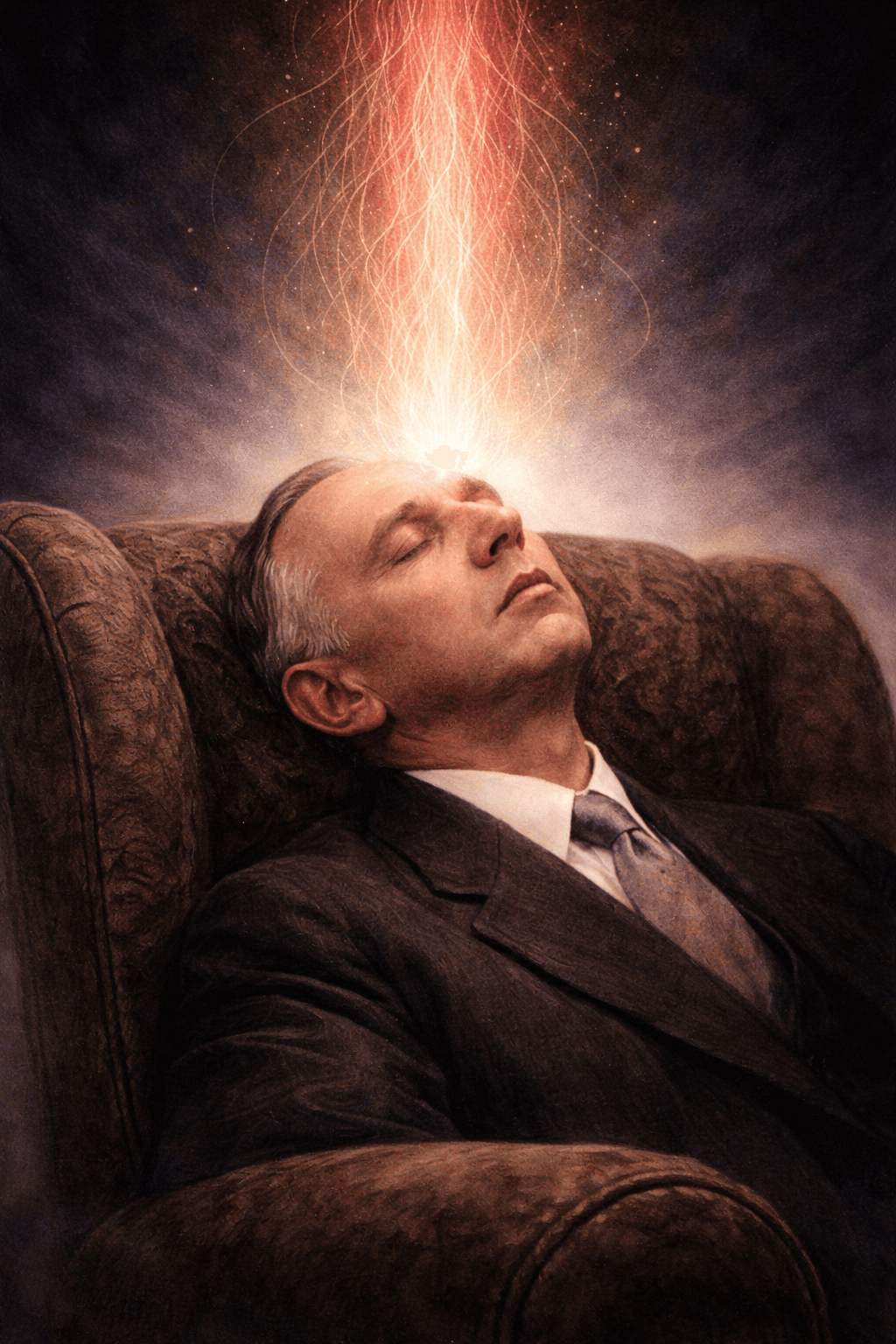
Edgar Cayce delivered over 14,000 psychic readings while unconscious, diagnosing illnesses and prescribing treatments for patients he never met.
Edgar Cayce, known as the "Sleeping Prophet," conducted over 14,000 documented psychic readings between 1901 and 1945. While in a self-induced trance state, Cayce would diagnose medical conditions and prescribe treatments for patients he had never met, often located hundreds of miles away. His secretary Gladys Davis stenographically recorded every session, creating an unprecedented archive of psychic material. Cayce's readings covered topics ranging from medical diagnoses to past-life regressions and Atlantis prophecies. Medical professionals, including Dr. Wesley Ketchum, initially skeptical, became believers after witnessing accurate diagnoses that conventional medicine had missed. The Association for Research and Enlightenment (A.R.E.) in Virginia Beach houses his complete files, making Cayce one of the most thoroughly documented psychics in history.
Stenographic Records of 14,306 Readings
Dr. Wesley Ketchum's Medical Documentation
Photographic Documentation of Reading Sessions
Medical Follow-up Letters and Testimonials
"I watched him go into these readings for over forty years, and I can tell you that Edgar Cayce in a reading was a completely different person from the Edgar Cayce I knew when he was awake. The voice was different, the knowledge was different, even his breathing pattern changed."
Gladys Davis served as Edgar Cayce's personal stenographer from 1923 until his death in 1945, recording every word of his readings in shorthand. With professional training in stenography and secretarial work, she was positioned directly beside Cayce during thousands of trance sessions. Davis observed the physical and vocal changes that occurred when Cayce entered his unconscious state, noting consistent patterns in his breathing, speech patterns, and the emergence of medical knowledge that exceeded his conscious education. Her daily presence during readings for over two decades makes her the most experienced witness to Cayce's psychic abilities.
"I have used Edgar Cayce as an unconscious diagnostician for four years. In hundreds of cases I have never known of any errors in diagnosis, except in cases where I have been unable to get into communication with him."
Dr. Wesley Ketchum was a licensed physician and homeopath practicing in Hopkinsville, Kentucky, who began working with Edgar Cayce in 1909. Initially skeptical of psychic phenomena, Dr. Ketchum started referring difficult medical cases to Cayce after witnessing diagnostic accuracy that exceeded conventional medical examination. As a medical professional trained in both traditional and homeopathic practices, Ketchum was qualified to evaluate the accuracy of Cayce's unconscious medical recommendations. His professional endorsement of Cayce's abilities appeared in medical journals and newspapers, risking his medical reputation to validate the psychic's diagnostic capabilities.
SHOW 2 MORE WITNESS STATEMENTS
"I grew up watching my father give readings. There was never any preparation, no research, no notes. He would simply lie down, close his eyes, and within minutes he was speaking about medical conditions of people he had never met, using terminology he couldn't pronounce when awake."
Hugh Lynn Cayce was Edgar Cayce's eldest son who witnessed thousands of his father's psychic readings throughout his childhood and adult years. As a family member present during both private and public sessions from the 1910s through the 1940s, he observed the consistent patterns in his father's trance states and the lack of any preparatory research or note-taking before readings. Hugh Lynn later became the director of the Association for Research and Enlightenment and was instrumental in preserving his father's work. His lifelong observation of the readings provides unique insight into the spontaneous nature of Cayce's psychic demonstrations.
"Edgar would often wake up from a reading and ask me what he had said. He genuinely had no memory of the medical advice he had given or the people he had described. Sometimes he would be embarrassed by the medical terms I would repeat to him, saying he didn't even understand what they meant."
Gertrude Cayce was Edgar Cayce's wife and the person who typically conducted his trance readings by asking questions and guiding the sessions. Present during readings from 1901 until Edgar's death in 1945, she observed his complete amnesia about the content of his unconscious statements. As his closest companion and the primary questioner during thousands of readings, Gertrude witnessed both his limited conscious medical knowledge and the dramatic contrast when he spoke with authority about complex medical conditions while unconscious. Her role as conductor of the readings gave her unique insight into the consistency and spontaneous nature of his psychic abilities.
Genuine Psychic Mediumship
Supporters argue that Cayce accessed information through extrasensory perception or contact with spiritual entities. This theory, promoted by the Association for Research and Enlightenment, points to his documented medical successes and the consistency of his unconscious personality across decades of readings.
Proponents cite cases where Cayce diagnosed rare conditions like appendicitis and tuberculosis that were later confirmed by physicians. The theory suggests he tapped into a universal consciousness or Akashic Records containing all knowledge.
However, critics question why his accuracy wasn't 100% if accessing divine knowledge, and why some predictions about world events failed to materialize. The selective documentation of successes versus failures remains a significant challenge to this interpretation.
Cryptomnesia and Subconscious Knowledge
Skeptics propose that Cayce's abilities stemmed from cryptomnesia - the unconscious recall of forgotten information. As a voracious reader with access to medical texts and osteopathic training materials, he may have absorbed vast amounts of medical knowledge that emerged during trance states.
This theory, supported by researchers like Martin Gardner, suggests that Cayce's subconscious mind processed and synthesized medical information in ways his conscious mind could not. The trance state may have eliminated psychological barriers to accessing this stored knowledge.
While this explains some medical accuracies, it struggles to account for diagnoses of patients' conditions that weren't described in contemporary medical literature, or his ability to identify ailments in people he had never encountered or researched.
Cold Reading and Statistical Probability
Some investigators argue that Cayce employed sophisticated cold reading techniques, making educated guesses based on statistical probability and subtle cues from those present during readings. This theory suggests he unconsciously picked up on verbal and physical hints from family members and associates.
Researchers note that many of Cayce's remedies involved common treatments of the era - osteopathic manipulation, dietary changes, and herbal remedies that often showed improvement regardless of the specific ailment. The placebo effect may have enhanced perceived successes.
However, this theory has difficulty explaining readings conducted for patients hundreds of miles away with no family members present, or his accurate identification of specific medical conditions rather than general wellness advice that could apply broadly.
Medical Intuition and Heightened Observation
A middle-ground theory suggests Cayce possessed exceptional medical intuition rather than supernatural abilities. Some physicians and researchers propose he had an extraordinary ability to synthesize subtle physical and behavioral cues that most people would miss.
Dr. Wesley Ketchum, who worked with Cayce for years, believed he demonstrated genuine but naturally occurring diagnostic intuition similar to what exceptional physicians sometimes display. This theory positions Cayce's abilities within the realm of rare but documented human capabilities.
This explanation accounts for his medical successes while avoiding supernatural claims, but it struggles to explain how such intuition could function when the patient was hundreds of miles away and Cayce had no physical contact or detailed background information to work from.
Collaborative Deception Network
The most cynical theory proposes that Cayce operated within a network of informants who gathered intelligence about patients before readings. This would involve telegraph networks, traveling associates, and possibly medical professionals who provided background information that Cayce then presented as psychic revelation.
Proponents of this theory point to the business aspects of Cayce's work and the financial motivations of those around him. They suggest that Gladys Davis and other close associates may have conducted background research that was then fed to Cayce before sessions.
While this could explain some successes, it requires an elaborate conspiracy involving dozens of people over four decades, with no documented evidence of such a network ever being exposed or confessed to by participants, even after Cayce's death.
While Edgar Cayce's documented accuracy rate remains disputed, the sheer volume of stenographic records and medical professional testimonials creates a compelling case study. Independent verification of specific medical successes exists, though comprehensive statistical analysis of his overall accuracy has never been completed. The involvement of licensed physicians like Dr. Wesley Ketchum and the detailed documentation by professional stenographers establishes credibility beyond typical psychic claims. However, the lack of controlled scientific testing and the cherry-picking of successful cases by supporters leaves room for skepticism about the true extent of his abilities.