The Most Haunted House in England
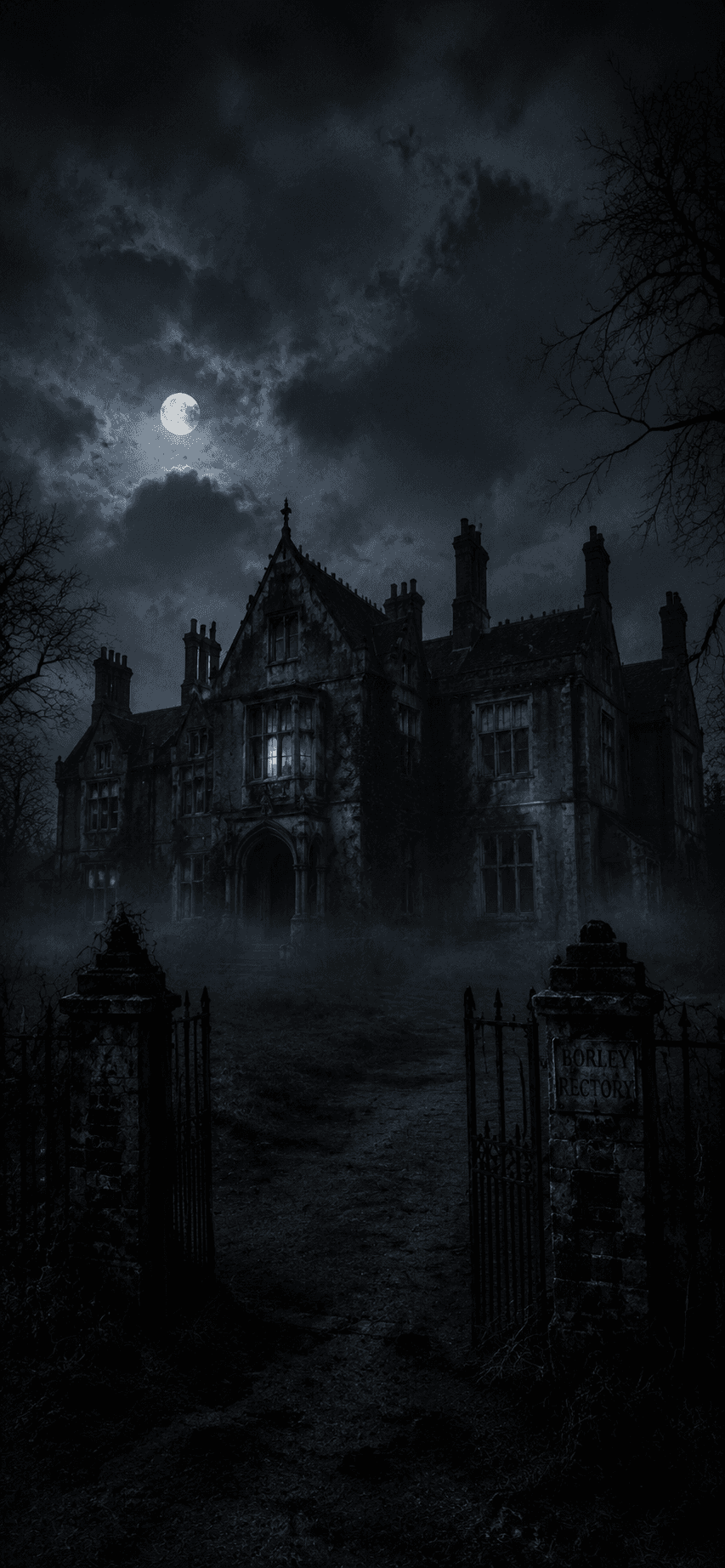
A gloomy Victorian rectory in rural Essex became the world's most famous haunted house, complete with a phantom nun, wall writings, and a psychic prediction of the fire that destroyed it. Then a reporter claimed he had caught the ghost hunter with his pockets full of pebbles.
Built in 1862 for the Reverend Henry Dawson Ellis Bull, Borley Rectory was an ugly red-brick pile overlooking a churchyard in Essex. By 1900, Bull's daughters claimed to have seen a spectral nun gliding along a path they nicknamed the Nun's Walk. Servants quit. Bells rang with no one pulling them.
In June 1929, the Daily Mirror sent reporter V.C. Wall and a well-known psychic investigator named Harry Price to look into the stories. Price never really left. Under the Reverend Lionel Foyster and his much younger wife Marianne (1930-1935), the case exploded: flying objects, locked-room bell ringing, and pencilled messages on the walls apparently addressed to Marianne.
Price rented the empty house for a year in 1937-38, recruiting 48 volunteer observers through a newspaper advertisement. A 1938 planchette seance allegedly warned the rectory would burn. On 27 February 1939, it did. In 1943 Price dug in the cellar and found fragments of a human jawbone. Then, in 1956, three researchers took the whole thing apart.
Harry Price's Published Investigation Books
The 1956 SPR Critical Report on the Haunting
Photographic Record of the Rectory Wall Writings
Cellar Excavation and the Recovered Jawbone Fragments
Observer Reports from the 1937-38 Rectory Tenancy
Sidney Glanville's Compiled Case Dossier
Ethel Bull was one of the daughters of the Reverend Henry Dawson Ellis Bull, who built and occupied Borley Rectory. She lived in the house as a young woman and was among the family members who reported seeing a figure resembling a nun in dark habit moving along the garden path that became known as the Nun's Walk, with the most cited family sighting dated to 28 July 1900, when several sisters said they observed the figure together. She survived into the 1960s and repeated her account to investigators throughout her life without financial benefit or public self-promotion. Her testimony matters because it predates Harry Price's involvement by nearly thirty years and cannot be attributed to press sensationalism.
Mabel Smith moved into Borley Rectory in October 1928 with her husband, the Reverend Guy Eric Smith, who had taken the parish. She found the vast, cold, unlit house oppressive and reported hearing unexplained footsteps, whispering, and bells ringing when the building was empty, as well as seeing lights in windows of unoccupied rooms. It was correspondence from the Smith household to the Daily Mirror in 1929 that brought reporters and Harry Price to Borley in the first place. Notably, her husband later stated publicly that they had never believed the house was haunted and had contacted the newspaper seeking rational explanation, saying their accounts were misrepresented. The Smiths left the rectory within nine months.
SHOW 2 MORE WITNESS STATEMENTS
Marianne Foyster lived at Borley Rectory from October 1930 to October 1935 as the much younger wife of the considerably older rector, Lionel Foyster. She was the reported focus of the most violent phase of the case: objects thrown at her, being struck by unseen hands, being locked in rooms, and the appearance of pencilled wall writings addressed to her by name. Her husband recorded these events in a manuscript diary of occurrences that he sent to Harry Price. In later interviews given decades afterward, she reportedly acknowledged exploiting the rectory's supernatural reputation to conceal a personal relationship, though she never offered a full or consistent explanation for every incident. She remains the single most important — and least reliable — witness in the case.
Captain W.H. Gregson purchased the disused Borley Rectory in 1938, aware of its notoriety, and renamed it Borley Priory. On the night of 27 February 1939, he was present in the house when a paraffin lamp in the hallway overturned and the building caught fire; he stated he had been unpacking books when the lamp fell. Villagers who gathered to watch the blaze were later reported to have seen figures in the upper windows, though firefighters found no one inside. Gregson's account is central because a planchette sitting held at the rectory eleven months earlier had allegedly predicted the fire. Insurance assessors reportedly questioned the circumstances of the blaze, and the claim was contested.
The Phantom Nun and the Murdered Novice
The romantic explanation, championed by Harry Price, held that Borley stood on the site of a medieval monastery where a nun and a monk attempted to elope. The nun was caught and walled up alive; the monk was hanged. Her restless spirit walks the Nun's Walk and the phantom coach carries the pair away forever.
Support came from the Foyster-era wall writings, which included pleas like "Marianne light mass prayers" — interpreted as a Catholic soul begging for release. Later seances produced a name, Marie Lairre, a French novice supposedly murdered in 1667. Price's 1943 cellar dig turned up jawbone fragments he treated as her remains.
The problem: no monastery ever existed at Borley. Local historians found nothing in ecclesiastical records. The name Marie Lairre arrived only through planchette sittings, meaning the evidence for the ghost's identity came from the ghost. That is not evidence. It is circular storytelling with candles.
Marianne Foyster's Convenient Poltergeist
The most intense phenomena — the flying bottles, the appearing messages, the objects hurled at Marianne — cluster almost exclusively around one person: Marianne Foyster, the rector's wife, roughly twenty years younger than her husband and deeply unhappy in rural Essex.
Investigators later established that Marianne had a relationship with a lodger, Frank Pearless, and in interviews given decades afterward she reportedly conceded that she had used the household's supernatural reputation to explain away absences, noises, and movements around the house. Some of the wall writings were addressed to her and answered by her in pencil, which is an unusual thing for a ghost to negotiate.
If Marianne was the source, the poltergeist becomes a social document — a young woman generating chaos in a house where she had no other power. But this theory cannot cover the 1900 nun sightings, which predate her by three decades, nor the reports of Price's volunteer observers in 1937-38, long after she had gone.
Harry Price Built the Haunting Himself
The devastating theory is that Borley's fame was manufactured by its investigator. Harry Price was a gifted publicist who had exposed other mediums and knew exactly how phenomena are faked. Daily Mail reporter Charles Sutton later wrote that during a visit he grabbed Price and found his pockets full of pebbles and bricks after a stone had mysteriously fallen.
The 1956 SPR report went further, showing that Price suppressed sceptical testimony, dramatised mild reports, and presented a demonstrably confused chronology. Former rector Guy Eric Smith — whose letter to the Daily Mirror started the whole circus — insisted publicly that he had never believed the rectory was haunted at all and felt his statements had been distorted.
But Price died in 1948 and could not answer. Defenders note that phenomena were reported by witnesses who had no contact with him, before and after his involvement. A fraudulent promoter does not automatically mean an empty house — only an unreliable archive.
A Rotting House With Bad Plumbing
The mundane explanation is almost boring enough to be true. Borley Rectory was a large, badly built Victorian house with more than twenty rooms, extensive dry rot, a warren of servants' bell wires, vermin in the walls, and open wells beneath. It sat near a road used by passing traffic. Doors that swung shut, footsteps in empty corridors, and bells that rang without hands are the standard signature of subsidence, draughts, rodents, and decayed mechanical wiring.
The 1956 investigators demonstrated that many reported sounds had prosaic causes and that observers, primed by newspaper coverage, interpreted ordinary noises as supernatural. Even the famous phantom coach may have been road traffic and reflected light.
What this cannot easily explain is the visual consistency of the nun reports across unrelated witnesses over forty years, or the wall writings appearing in daylight in occupied rooms. Bad architecture accounts for the soundtrack. It does not account for the cast.
The Fire Was Predicted Because It Was Planned
In March 1938, during a planchette sitting at Borley, a communicator calling itself Sunex Amures reportedly announced that the rectory would burn down. Eleven months later, on 27 February 1939, an oil lamp overturned in the hallway and the house was gutted. Price presented this as one of the great fulfilled prophecies in psychical research.
There is a duller reading. The owner at the time, Captain W.H. Gregson, had purchased the property, was well aware of its supernatural celebrity, and had insured it. Insurance assessors reportedly disputed the circumstances of the blaze and the claim was contested. A prediction is easy to fulfil when you control the matches.
No arson was ever proven, and Gregson maintained he was unpacking books when the lamp fell. Still, the sequence — famous haunted house, publicised prophecy, insured fire, contested payout — is a chain most detectives would want to pull on.
Borley is less a haunting than a case study in how hauntings are manufactured. The 1956 SPR report by Dingwall, Goldney and Hall demonstrated that Harry Price exaggerated, selectively edited witness accounts, and probably produced phenomena himself — Daily Mail reporter Charles Sutton claimed he caught Price with pebbles in his pockets. Marianne Foyster reportedly acknowledged in later interviews that she had used the ghost stories as cover for a personal relationship. Yet the sightings began decades before Price arrived, and dozens of ordinary observers reported things they could not explain. Something odd happened at Borley. Almost none of it needs a ghost.