The Resurrection Mary Hitchhiker Files
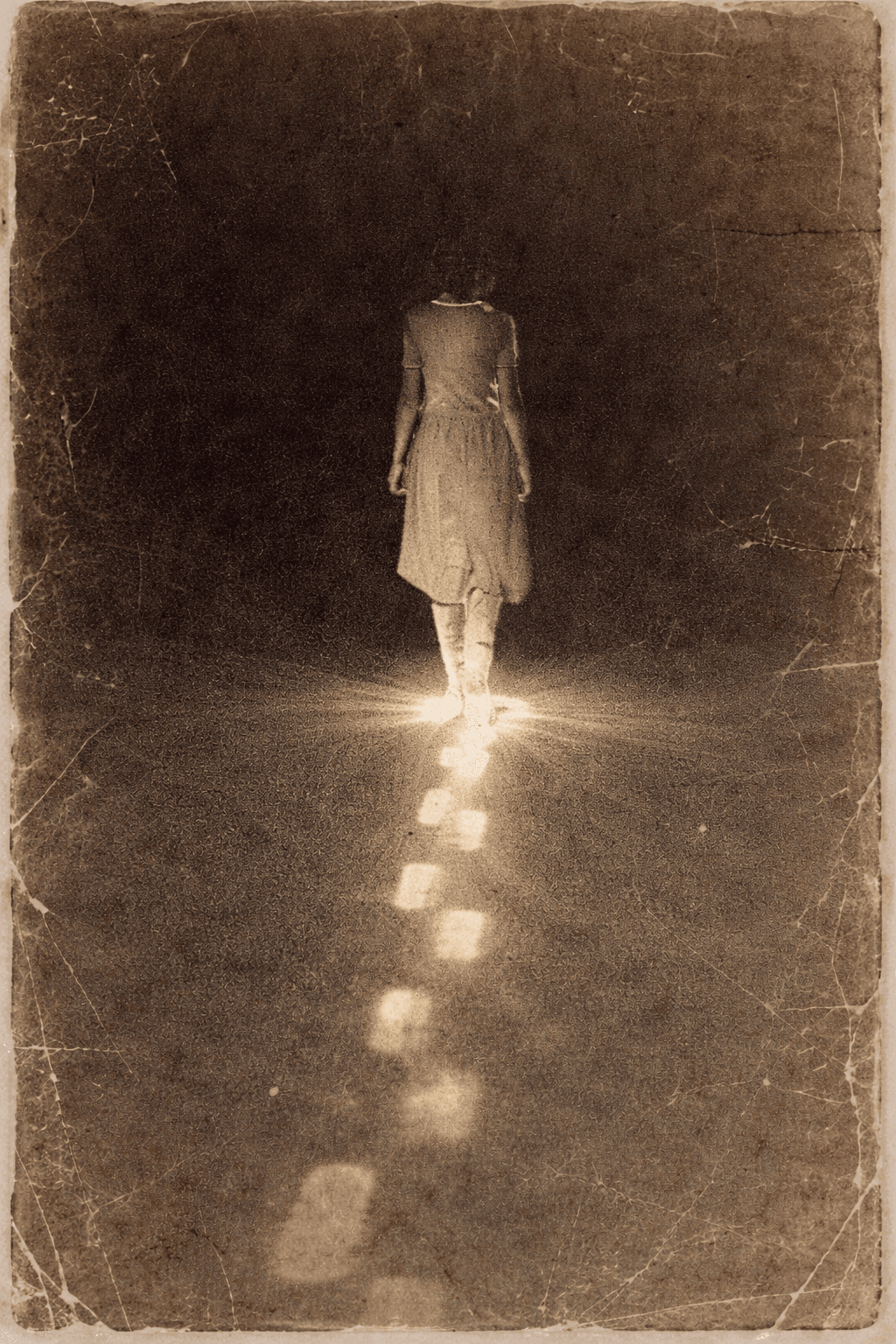
Ethereal blonde woman in white dress reportedly hitchhikes along Archer Avenue near Chicago's Resurrection Cemetery since 1939. Vanishes from moving vehicles.
Since 1939, motorists along Chicago's Archer Avenue have reported encounters with a mysterious blonde woman in a white ballgown and dancing shoes. Witnesses describe picking up the hitchhiker near Resurrection Cemetery, only to have her vanish mid-conversation - often after asking to be dropped at the cemetery gates. The apparition, dubbed "Resurrection Mary," allegedly appears on weekend nights, particularly around Polish-American holidays. In 1976, a taxi driver reported the woman's hands felt ice-cold and she disappeared from his moving cab. Sixty-plus encounters have been documented by paranormal investigators, with witnesses ranging from teenagers to senior citizens. The legend gained national attention when cemetery gates were found bent outward in 1977, with small handprints embedded in the iron - though cemetery officials attributed this to a snowplow accident. Despite decades of investigation, no definitive explanation has emerged for the consistent eyewitness accounts.
Chicago Police Department Incident Reports
Resurrection Cemetery Gate Damage Investigation
Oh Henry Ballroom Historical Documentation
The Surveillance Gap on Archer Avenue
"She was the most beautiful woman I had ever seen, but her hands were ice-cold, and when I looked into her eyes, I felt like I was looking into eternity. When we got to the cemetery gates, I turned to say goodbye, and she was gone. The car door never opened, but she was gone."
Jerry Palus was a taxi driver working the night shift for Yellow Cab Company when he picked up a blonde woman in a white dress outside the Oh Henry Ballroom in 1976. With fifteen years of driving experience and thousands of late-night passengers, Palus was familiar with unusual encounters, but this ride left him deeply shaken. He reported the incident to both his dispatcher and Chicago Police, becoming one of the most cited witnesses in Resurrection Mary investigations.
"I was driving south on Archer when I saw this girl in a white dress walking along the road. When I stopped to offer her a ride, she got in and asked me to take her to Resurrection Cemetery. We talked for maybe ten minutes about the weather and the neighborhood. Then I looked over, and the passenger seat was empty. I pulled over and checked everywhere - she was just gone."
Ralph Traini worked as a maintenance supervisor for the Chicago Park District and was returning home from a late shift in October 1979 when he encountered the mysterious hitchhiker. A lifelong Chicago resident familiar with the area, Traini had never heard of the Resurrection Mary legend before his experience. His detailed account to police investigators noted that the woman appeared solid and normal until her sudden disappearance.
SHOW 2 MORE WITNESS STATEMENTS
"My friend and I were driving past the cemetery around midnight when we saw a girl in white standing by the gates. She looked upset, like she was trying to get in. When we slowed down to see if she needed help, she turned toward us, and her face was pale as moonlight. Then she just faded away like she was made of mist."
Bill Cagney was a high school senior returning from a school dance with his girlfriend in March 1980 when they witnessed the apparition near Resurrection Cemetery gates. Neither teenager was familiar with local ghost stories, and Cagney's girlfriend corroborated his account when they reported the sighting to Cagney's parents the following day. Both students maintained their story despite skepticism from adults and classmates.
"She appeared so suddenly in my headlights that I almost hit her. She was young and pretty, wearing an old-fashioned white dress, and she seemed confused about where she was. I offered to call someone for her, but she just asked for a ride to the cemetery. When we got there, I turned to ask if she needed me to wait, but she had vanished completely."
Maria Santos was working as a night nurse at Christ Hospital and was driving home along Archer Avenue in January 1995 when she encountered the mysterious woman. As a medical professional accustomed to emergency situations and human distress, Santos initially approached the encounter from a helping perspective rather than a supernatural one. Her detailed report to paranormal investigator Richard Crowe noted the woman's period-style clothing and anachronistic speech patterns.
Anna "Marija" Norkus Ghost Theory
The most widely accepted theory identifies Resurrection Mary as the spirit of Anna "Marija" Norkus, a 13-year-old Polish-American girl killed in a 1927 car accident while returning from a dance at the Oh Henry Ballroom. Paranormal researcher Dale Kaczmarek of the Ghost Research Society has championed this theory since the 1980s, noting the white dress and dancing shoes match what Anna wore the night she died.
Norkus was buried in Resurrection Cemetery following a traditional Polish Catholic funeral, which explains why the apparition consistently requests to be taken there. The timeline discrepancy - with first sightings in 1939 rather than 1927 - could reflect the time needed for the spirit to manifest or gain strength.
However, this theory faces challenges: cemetery records don't clearly establish Norkus's burial there, and some researchers question whether one tragic death could generate decades of consistent manifestations. Why would Anna's spirit specifically target Archer Avenue rather than the accident site itself?
Composite Spirit Phenomenon
Paranormal investigator Ursula Bielski, author of "Chicago Haunts", proposes that Resurrection Mary represents a composite spirit - multiple deceased women whose stories have merged into one legend. This theory accounts for variations in witness descriptions and the impossibly long timespan of consistent sightings.
Bielski's research identified several candidates: Mary Bregovy (died 1934 at Oh Henry Ballroom), Anna Norkus (1927 car accident), and unnamed victims from Polish-American community tragedies. The Resurrection Cemetery location served Chicago's large Polish immigrant population, making it a convergence point for multiple spirits with similar backstories.
This theory explains why physical descriptions vary slightly between encounters - witnesses might be seeing different spirits who've become culturally conflated. The white dress becomes symbolic rather than specific, representing the formal wear typical of 1920s-1940s social events. Critics argue this theory is too convenient, attempting to rationalize inconsistencies rather than addressing the fundamental question of whether any supernatural activity occurs along Archer Avenue.
Psychological Mass Suggestion
Skeptical researchers propose that Resurrection Mary sightings result from mass psychological suggestion amplified by media attention and cultural expectation. Psychologist Dr. Joe Nickell of the Committee for Skeptical Inquiry argues that the 1979 book "Ghostly Legends" by Dolores Riccio popularized the story, creating a feedback loop of manufactured encounters.
This theory suggests that drivers along Archer Avenue, primed by knowledge of the legend, misinterpret ordinary hitchhikers or experience pareidolia - seeing meaningful patterns in random stimuli like fog, shadows, or reflections. The consistent story elements reflect cultural programming rather than supernatural consistency.
Night driving conditions, alcohol consumption after social events, and the power of suggestion could explain most encounters. The cemetery setting adds psychological weight, making witnesses more susceptible to supernatural interpretation of normal events. However, this theory struggles to explain encounters by witnesses with no prior knowledge of the legend, or cases where multiple passengers reportedly witnessed the same apparition simultaneously.
Residual Electromagnetic Imprint
Some paranormal researchers theorize that Resurrection Mary represents a residual haunting - an electromagnetic imprint of traumatic events that replays under specific conditions. Physicist Dr. William Roll, who studied recurrent spontaneous psychokinesis, suggested that limestone bedrock beneath Resurrection Cemetery could act as a natural recording medium for psychic impressions.
This theory proposes that intense emotional trauma from fatal accidents creates electromagnetic disturbances that become imprinted in the environment. The consistent appearance and behavior of Resurrection Mary would represent a psychic recording rather than an interactive spirit. Weather conditions, electromagnetic field fluctuations, and individual sensitivity determine when the imprint becomes visible to witnesses.
The 1977 gate incident, where handprints were allegedly found in bent iron bars, could represent psychokinetic energy discharge from the imprint. Critics note the lack of measurable electromagnetic anomalies along Archer Avenue and question why other traumatic locations don't produce similar consistent manifestations. If residual energy exists, why does Mary interact with witnesses rather than simply replaying the same scene?
Interdimensional Slip Theory
A fringe theory popularized by paranormal investigator Brad Steiger suggests Resurrection Mary represents interdimensional bleeding - moments when parallel realities briefly overlap with our dimension. This theory attempts to explain why Mary appears solid and interactive rather than translucent like traditional ghost encounters.
Steiger's hypothesis proposes that Archer Avenue sits on a dimensional weak point where the boundary between realities becomes permeable. In an alternate timeline, Mary might still be alive and traveling the same route, occasionally slipping into our dimension. This explains her realistic appearance, physical interactions, and sudden disappearances when dimensional barriers reassert themselves.
The theory draws on quantum mechanics concepts like parallel universes and multiverse theory, suggesting that consciousness can briefly traverse dimensional boundaries under specific electromagnetic conditions. Cemetery proximity might create spiritual resonance that facilitates these crossings. However, this theory lacks scientific foundation and represents speculative metaphysics rather than testable hypothesis. Why would only one individual consistently slip between dimensions, and why always in period costume from decades past?
While no physical evidence supports supernatural claims, the consistency of witness testimonies across eight decades remains unexplained. Psychological factors like expectation bias and urban legend proliferation could account for sightings. However, witnesses include credible individuals with no prior knowledge of the legend. The 1977 gate incident provides the closest thing to physical evidence, though official explanations exist. Modern surveillance technology along Archer Avenue has yet to capture definitive footage, suggesting either natural explanations or an evolving phenomenon.