The Lost Thunderbird Photograph
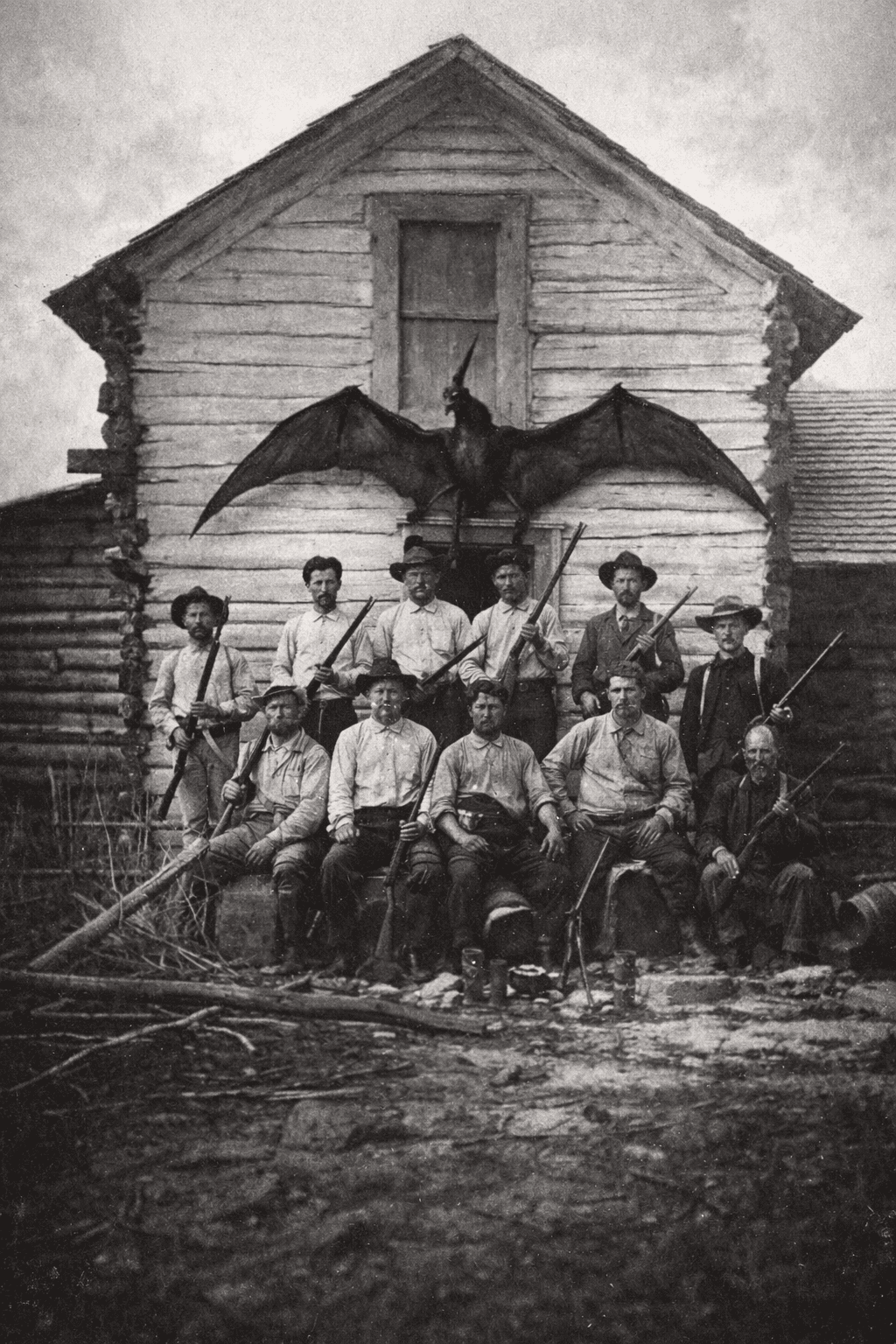
A famous photograph allegedly showing a giant bird crucified on a barn wall has become cryptozoology's most elusive piece of evidence.
In 1890, cowboys in the Arizona Territory allegedly shot down a massive bird with a 30-foot wingspan near Tombstone. The creature was reportedly nailed to a barn wall and photographed with the shooters posing beside it. This photograph became legendary in cryptozoology circles, with hundreds claiming to have seen it in various publications over the decades.
The mystery deepened when researchers tried to locate the original image. Despite widespread claims of publication in newspapers, magazines, and books throughout the 20th century, no verifiable copy has ever been found. The phenomenon became known as the "Thunderbird Photo Effect" - a collective false memory where people vividly remember seeing something that may never have existed. Some believe the photo was suppressed, while skeptics argue it's a mass false memory fueled by similar hoax photographs and artistic renderings.
Tombstone Epitaph Newspaper Archive Analysis
Smithsonian Institution Collection Records
Witness Testimony Documentation
Hoax Photograph Analysis
"I spent months going through every issue of the Tombstone Epitaph from that era, and there's absolutely nothing. No giant bird, no photograph, no mention of anything even remotely similar."
Jack Pearl was a researcher and writer who conducted one of the most thorough investigations into the Thunderbird photograph claims during the 1990s. He systematically examined newspaper archives, contacted museums, and interviewed dozens of people who claimed to remember seeing the image. His work was documented in various Fortean publications and helped establish the current understanding that no contemporary documentation of the alleged 1890 incident exists.
"The more I investigated, the more I realized we were dealing with a phantom photograph. Hundreds of people remember it, but it simply doesn't exist in any verifiable form."
Mark Chorvinsky was the editor of Strange Magazine and a respected Fortean researcher who spent considerable effort investigating the Thunderbird photograph mystery. He collaborated with other researchers to systematically check archives, contact potential sources, and document witness testimonies. His work helped establish the photograph as one of cryptozoology's most persistent unsolved mysteries and contributed to understanding the phenomenon of collective false memory.
SHOW 2 MORE WITNESS STATEMENTS
"I've been tracking this photograph for over forty years. Despite hundreds of people claiming they've seen it, despite checking every possible archive and publication, it remains as elusive as the creature it supposedly depicted."
Loren Coleman is one of America's most prominent cryptozoologists and founder of the International Cryptozoology Museum in Portland, Maine. He has authored numerous books on unexplained phenomena and has been investigating the Thunderbird photograph mystery since the 1970s. His extensive research files contain hundreds of witness accounts and represent the most comprehensive investigation into this cryptozoological mystery. Coleman's work spans decades and includes correspondence with museums, libraries, and private collectors worldwide.
"I distinctly remember seeing that photograph in a National Geographic magazine sometime in the late 1950s. It showed these cowboys standing next to this enormous bird nailed to a barn wall. The wingspan had to be at least 25 feet."
This testimony represents hundreds of similar accounts collected by researchers over the decades. Many witnesses provide specific publication details and vivid descriptions of the photograph's contents, yet none of these publications have been verified. The consistency of these independent testimonials remains one of the most puzzling aspects of the Thunderbird photograph mystery, raising questions about the nature of memory and the possibility of shared false recollections.
Mass False Memory Phenomenon
Proposed by psychologists and skeptical researchers, this theory suggests the Thunderbird photograph never existed and represents a collective false memory. Dr. Elizabeth Loftus's research on memory manipulation demonstrates how people can develop vivid recollections of events that never occurred, especially when exposed to similar imagery or suggestions.
Supporters point to the complete absence of any verifiable publication despite hundreds of claims. They argue that exposure to hoax photographs from the 1960s, artistic renderings, and repeated storytelling created a shared false memory across multiple generations.
However, this theory struggles to explain why so many people independently claim specific publication details, including magazine names and approximate dates. Could mass psychology truly create such detailed and consistent false memories across decades?
Government Suppression Theory
Some researchers believe the photograph was deliberately suppressed by government agencies or academic institutions to prevent public panic or protect classified information about unknown species. This theory gained traction during the Cold War era when government secrecy was at its peak.
Proponents argue that the Smithsonian Institution has a history of "losing" controversial specimens that don't fit mainstream scientific paradigms. They point to similar cases where cryptozoological evidence allegedly disappeared from official collections or was classified for national security reasons.
Critics note the lack of evidence for any suppression campaign and question why authorities would bother hiding a 19th-century photograph. If the government possessed such compelling cryptozoological evidence, wouldn't there be whistleblowers or leaked documents after more than a century?
Misidentified Historical Photograph
This theory proposes that people are remembering a real but different photograph - possibly showing pioneers with a large conventional bird, pteranodon replica, or even a hoax creation that was later misinterpreted as authentic. Researcher Mark A. Hall suggested the memory might stem from multiple similar images conflated over time.
Several hoax photographs from the 1960s showing supposed pterodactyls or giant birds may have contaminated collective memory. These images, combined with artistic interpretations and Wild West folklore, could have created a composite "memory" of the original Tombstone photograph.
This theory explains both the vivid memories and the absence of the specific image people remember. Yet it raises questions about why no researcher has definitively identified the source photograph that supposedly triggered this mass confusion. What original image could be so compelling yet remain equally elusive?
Lost Media Documentation
Many researchers believe the photograph genuinely existed but was lost due to poor archival practices, natural disasters, or simple neglect. This theory acknowledges that countless historical documents and photographs from the late 1800s have been permanently lost to time, fire, flood, and deterioration.
Cryptozoologist Loren Coleman has documented numerous cases where important historical evidence was destroyed in newspaper archive fires, museum accidents, or during wartime. The fragile nature of early photographic plates and prints makes permanent loss entirely plausible.
Supporters note that many people's memories include specific publication contexts that seem too detailed for pure fabrication. However, skeptics argue that if the photo was widely published as claimed, at least one copy should have survived in the thousands of archives, private collections, and institutional holdings that have been digitized in recent decades.
Composite Hoax Creation
Some investigators propose that the "original" 1890 photograph was itself a carefully constructed hoax using taxidermy, props, or early photographic manipulation techniques. Victorian-era photographers were skilled at creating elaborate fake images for entertainment and profit, particularly in frontier towns like Tombstone.
This theory suggests the image may have been created for a traveling show, newspaper publicity stunt, or local entertainment, then gradually transformed into "evidence" through repeated retelling. The absence of contemporary documentation supports this idea - genuine cryptozoological discoveries would likely have generated more immediate scientific interest.
Yet this explanation still requires explaining why the hoax photograph itself has vanished so completely. If it was created for publicity purposes, wouldn't copies have been preserved for historical or entertainment value? The mystery deepens rather than resolves.
After decades of investigation by cryptozoologists and researchers, no authentic copy of the Thunderbird photograph has been located despite hundreds of claims of publication. The lack of verifiable sources, combined with the psychological phenomenon of false memories, suggests the famous image likely never existed. While giant bird sightings continue to be reported, the legendary photograph remains one of cryptozoology's greatest unsolved mysteries - or most persistent illusions.