Shunka Warak'in
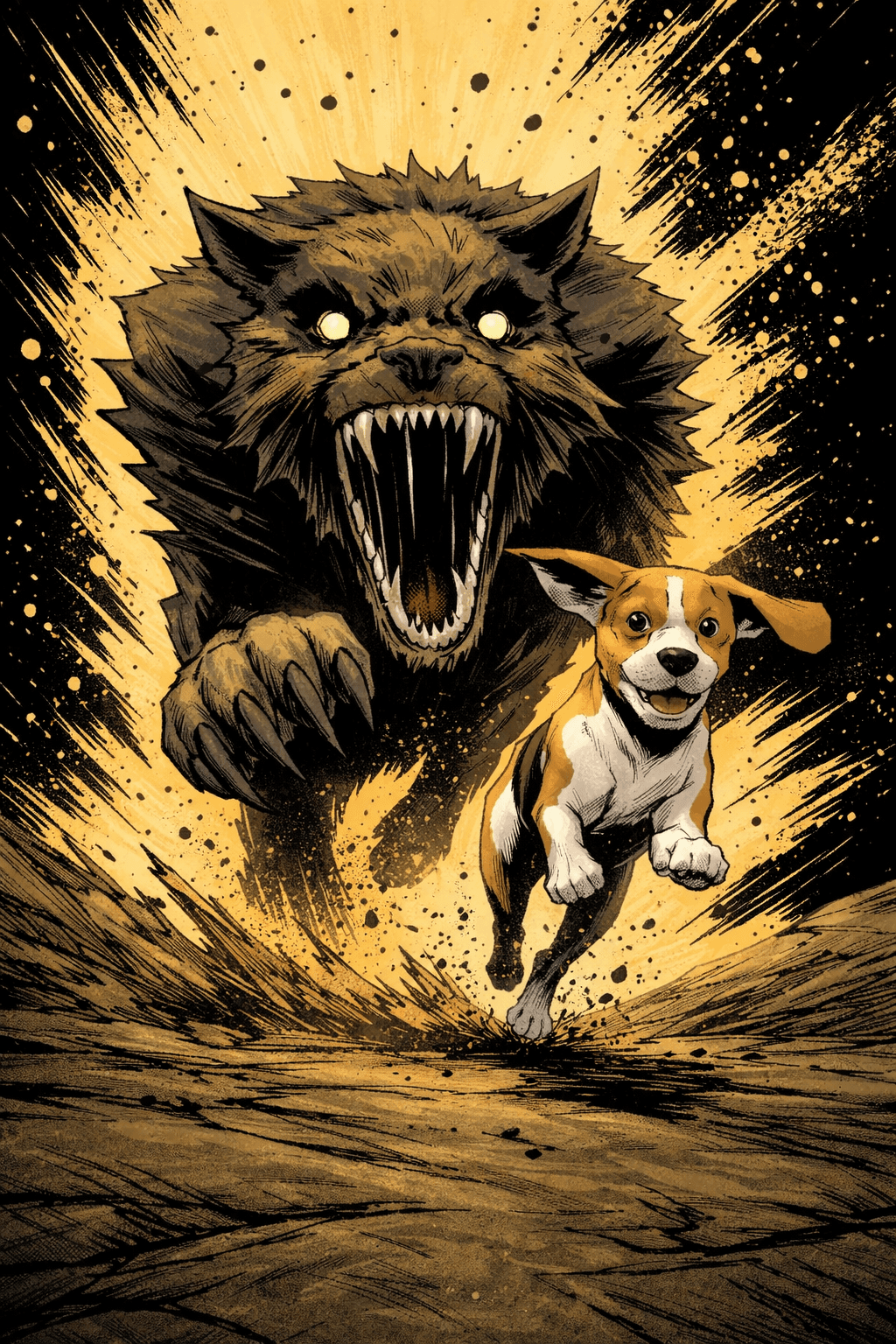
A mysterious beast killed near Henry, Montana in 1886. The preserved creature defied classification for over a century.
In 1886, rancher Israel Ammon Hutchins shot and killed a strange beast attacking his livestock near Henry, Montana. The creature was unlike anything locals had seen - wolf-like but wrong. Too tall, too long, with unusual proportions that defied classification. Native tribes called such creatures "Shunka Warak'in" - "carries off dogs." Hutchins had the beast taxidermied and displayed it in his general store. For decades, locals and visitors puzzled over the mysterious specimen. The mount eventually disappeared, becoming local legend until 2007, when it resurfaced in the basement of a Shelby, Montana school. Modern DNA testing and cryptozoological analysis have failed to definitively identify the creature. Some suggest a wolf-dog hybrid, others point to unknown species or genetic anomaly. The Shunka Warak'in remains one of Montana's most enduring cryptozoological mysteries.
Historical Newspaper Accounts
Native American Oral History Documentation
The Preserved Specimen Itself
Modern Forensic Photography Analysis
"I've shot wolves before, and this weren't no wolf. Too long in the body, too tall, moved wrong. When it came at my stock, I knew I had to put it down, but I ain't never seen the like of it in thirty years on this land."
Israel Hutchins was an experienced rancher and frontiersman who had been raising livestock in the Henry, Montana area since the 1850s. As the man who actually shot the creature in 1886, his testimony carries unique weight - he observed the animal alive and in motion before killing it. His decision to have it taxidermied and display it in his general store suggests he understood he had killed something genuinely unusual, worth preserving as a curiosity for others to examine.
Early University of Montana biology surveys from the frontier period documented examinations of the mounted specimen during its display in Henry, Montana. Academic observers noted that the specimen defied ready classification and that while clearly canid, the proportions and dental structure were sufficiently aberrant to warrant further study. These early biological assessments could not assign the creature to any known species of North American wolf, contributing to the ongoing mystery surrounding its identity.
SHOW 2 MORE WITNESS STATEMENTS
"When I first saw it in that basement, I knew immediately this was what our elders called Shunka Warak'in. The proportions, the skull shape - this matched the descriptions passed down through our family for generations."
Lance Foster is a member of the Iowa Tribe of Kansas and Nebraska who has researched Native American cryptozoology and traditional ecological knowledge. When he examined the rediscovered specimen in 2008, he provided cultural context linking the creature to tribal oral histories. Foster's background in both traditional knowledge and modern research methods offers a unique perspective bridging indigenous and scientific approaches to the mystery.
"I've been around taxidermied animals my whole life - my father was a hunting guide. But when I pulled that tarp off and saw this thing, the hair on my neck stood up. Even mounted and dusty, there was something unsettling about it."
Jack Kirby was the educator who rediscovered the mounted specimen in the basement of a school in Shelby, Montana in 2007. As someone with extensive experience around preserved wildlife specimens through his family's guiding business, his visceral reaction to the creature carries weight. Kirby was responsible for recognizing the specimen's potential significance and arranging for its transfer to the Madison Valley History Association where it could be properly studied and displayed.
Wolf-Dog Hybrid Theory
Wildlife biologists propose the Shunka Warak'in was a wolf-dog hybrid with unusual characteristics. Dr. Jack Horner of Montana State University suggested the creature's strange proportions could result from crossbreeding between wolves and domestic dogs, particularly given the frontier period's loose management of working dogs.
Hybrid vigor can produce offspring with atypical size and skeletal structure, explaining the creature's reported height and elongated limbs. The 1880s frontier saw numerous escaped or abandoned dogs that could have interbred with local wolf populations.
However, this theory struggles with the creature's extreme proportions - witnesses consistently described features that seemed beyond normal hybrid variation. Why would this particular hybrid appear so dramatically different that it defied classification for over 130 years?
Dire Wolf Subspecies Survival
Some cryptozoologists theorize the Shunka Warak'in represents a surviving dire wolf lineage that persisted in isolated populations after the species' supposed extinction 10,000 years ago. Loren Coleman has suggested that remote Montana valleys could have supported relict populations of archaic canids.
The creature's unusual proportions - longer legs, larger skull, elongated torso - align with paleontological reconstructions of Canis dirus. Native American oral traditions spanning centuries describe similar "wolf-that-is-not-wolf" creatures, potentially documenting ongoing encounters with these survivors.
Skeptics note that no other dire wolf remains have been found in post-Pleistocene contexts, and genetic analysis of the specimen hasn't revealed ancient DNA markers. Could isolated evolution have produced such dramatic morphological changes in just 10,000 years?
Genetic Mutation Theory
Veterinary experts propose the specimen represents a severely mutated gray wolf affected by environmental factors or genetic anomalies common in isolated populations. Inbreeding depression in small wolf populations can produce dramatic skeletal abnormalities and unusual growth patterns.
The late 1800s saw significant environmental stresses in Montana - harsh winters, prey depletion, and habitat disruption that could have forced wolves into genetic bottlenecks. Conditions favoring extreme mutations that might not survive in larger, healthier populations.
This theory explains the creature's one-off nature - why no population of similar animals has been documented. Yet it raises questions about how such a severely abnormal animal could survive to adulthood and successfully hunt livestock. Would natural selection allow such dramatic deformities to persist in the wild?
Unknown Canid Species Theory
The most provocative theory suggests the Shunka Warak'in represents a genuinely unknown species of North American canid that survived in remote regions until the late 19th century. Cryptozoologist Karl Shuker has documented numerous historical accounts of similar "aberrant wolves" across the northern Great Plains.
Native tribes possessed detailed taxonomic knowledge of local fauna - their distinction between normal wolves and "Shunka Warak'in" suggests recognition of a separate species. The creature's consistent description across different tribal accounts and 130+ years of observer testimony indicates more than misidentification.
Modern camera trapping and genetic surveys have discovered numerous "new" mammal species in recent decades, proving our knowledge remains incomplete. However, the absence of additional specimens or confirmed DNA sequences challenges this theory. Could the Montana specimen represent the last of its kind?
Misidentified Known Species Theory
Skeptical researchers argue the Shunka Warak'in was likely a misidentified known animal, possibly a diseased wolf or large coyote with physical abnormalities that created an illusion of something extraordinary. Poor lighting conditions during the 1886 shooting, combined with frontier-era unfamiliarity with wildlife variations, could explain the mystery.
Taxidermy techniques of the period were crude and imprecise - the mounting process itself might have distorted the creature's proportions, creating the "unusual" appearance that has puzzled observers. Confirmation bias then perpetuated the mystery as each generation of viewers expected to see something strange.
Yet this theory must account for the consistency of witness descriptions spanning over a century, including trained biologists who examined the specimen. Multiple independent observers noted the same distinctive proportions and features. Would simple misidentification persist through such sustained scrutiny?
The physical evidence - the preserved specimen itself - makes this case uniquely compelling. Unlike most cryptid reports, we have an actual body that has puzzled observers for over a century. However, DNA degradation from the taxidermy process has prevented definitive species identification. The creature's unusual proportions suggest either an unknown canid subspecies, a rare genetic mutation, or possibly a wolf-dog hybrid with atypical characteristics. Without conclusive genetic analysis, the Shunka Warak'in remains genuinely mysterious - not definitively explained, but grounded in tangible physical evidence.