The Tuskegee Deception: America's 40-Year Medical Experiment
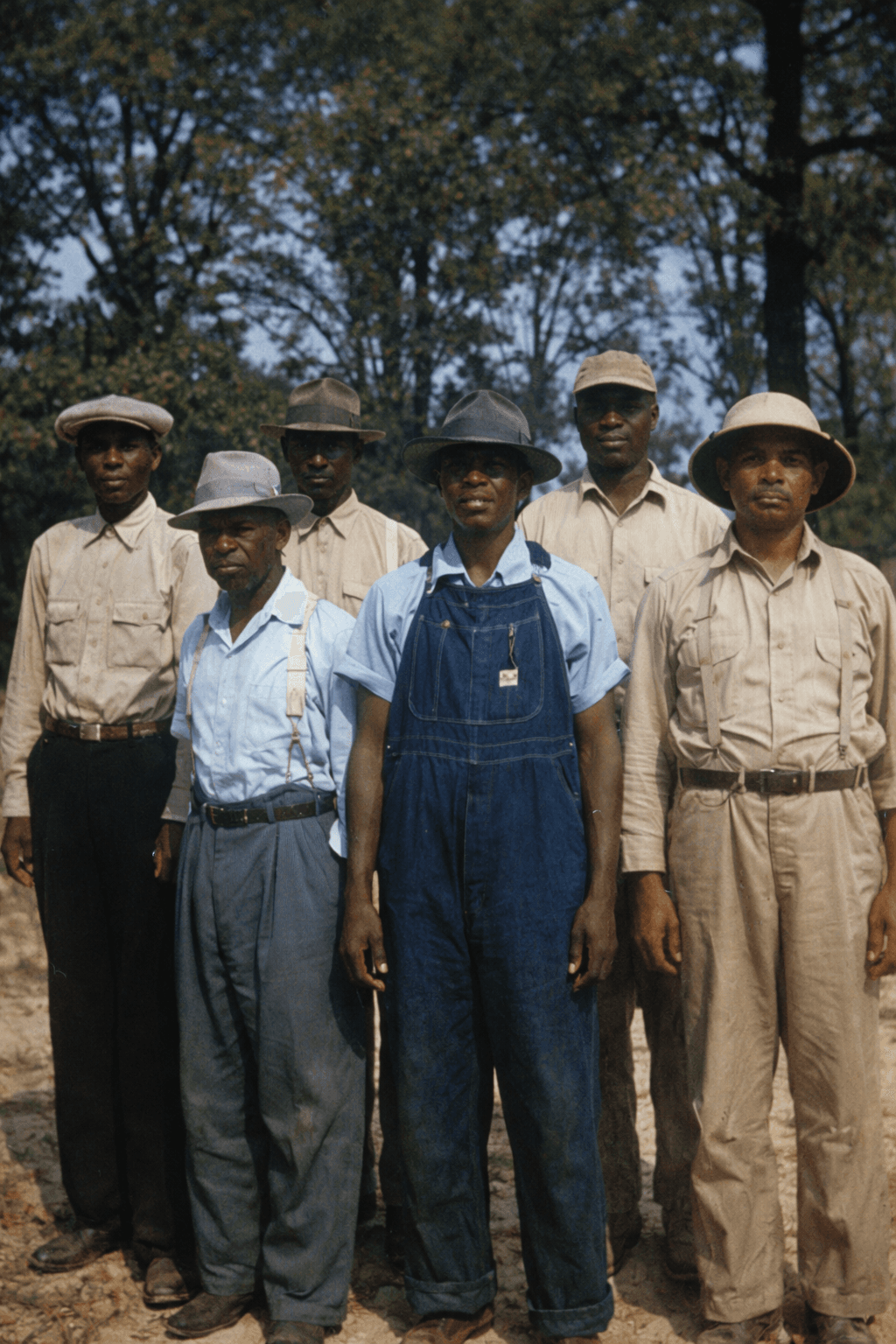
Government researchers deliberately withheld syphilis treatment from **399 Black men** for four decades, telling them they were being treated for "bad blood."
In 1932, the U.S. Public Health Service launched what would become one of America's most notorious medical experiments. 399 Black men with syphilis in rural Alabama were told they were receiving free healthcare for "bad blood" - never informed they had syphilis or that effective treatment existed. When penicillin became the standard cure in the 1940s, researchers deliberately withheld it to study the disease's untreated progression. The men received aspirin and iron supplements while syphilis ravaged their bodies, spreading to wives and children. Whistleblower Peter Buxtun finally exposed the study in 1972 after internal complaints were ignored for years. By then, 128 men had died from syphilis complications, 40 wives were infected, and 19 children were born with congenital syphilis. The revelation shattered public trust in medical research and led to comprehensive reforms in human experimentation ethics.
Original Study Protocols and Internal Correspondence
Congressional Hearing Testimonies and Government Investigations
Medical Records and Autopsy Reports
Associated Press Investigation and Media Coverage
"I was told that this was a study of the effects of untreated syphilis on the Negro male. I was appalled. These were human beings, not laboratory animals."
Peter Buxtun was a venereal disease investigator for the Public Health Service who first learned about Tuskegee in 1965. As a young epidemiologist, he was shocked to discover that the government was actively withholding treatment from syphilis patients. Buxtun spent six years trying to expose the study through internal channels before finally leaking documents to the Associated Press in 1972. His whistleblowing directly led to the study's termination and subsequent congressional investigations.
"All these years I thought they were doctoring me for bad blood. They never told me I had syphilis."
Charlie Pollard was one of the surviving participants interviewed by the Associated Press when the story broke in 1972. He had been receiving "treatment" for 40 years without ever being told his actual diagnosis. Pollard became one of the lead plaintiffs in the class-action lawsuit against the government, which resulted in a $10 million settlement in 1974. His testimony helped expose the systematic deception that characterized the entire study.
SHOW 2 MORE WITNESS STATEMENTS
"The men's status did not warrant ethical debate. They were subjects, not patients; clinical material, not sick people."
Dr. John Cutler was a Public Health Service physician who oversaw the Tuskegee Study during its later years and had previously conducted syphilis experiments in Guatemala. His testimony before Congress in 1973 revealed the dehumanizing mindset that enabled decades of medical abuse. Cutler defended the study as scientifically valuable and claimed the participants were "too ignorant" to understand their condition anyway. His callous testimony shocked senators and the public.
"They said I had bad blood, and that's all I knew. My wife got it too, and she died from it."
Herman Shaw was another study participant who learned of his syphilis diagnosis only when reporters contacted him in 1972. His wife had contracted syphilis from him and died from complications years earlier, a tragedy that could have been prevented with proper treatment. Shaw testified before Congress about the impact of the study on participants' families and became an advocate for medical research reform. He lived to see President Clinton's formal apology in 1997.
Racial Eugenics Experiment
Some researchers argue the Tuskegee Study was part of a broader eugenics agenda targeting Black Americans. Historian Susan Reverby discovered that the same Public Health Service officials conducted syphilis experiments on Guatemalan prisoners, suggesting a pattern of viewing marginalized populations as expendable test subjects.
The study's timing coincided with the height of America's eugenics movement, which promoted "racial hygiene" theories. Documents show researchers were particularly interested in proving racial differences in disease susceptibility. The deliberate recruitment of poor, uneducated Black men wasn't random - it reflected prevailing beliefs about racial hierarchy.
However, this theory raises uncomfortable questions about the extent of government-sponsored eugenics programs. If Tuskegee was part of a larger agenda, what other experiments remain hidden? The discovery of the Guatemala studies decades later suggests we may never know the full scope of these programs.
Medical Racism and Scientific Justification
Medical historian Allan Brandt argues that Tuskegee reflected deeply ingrained medical racism disguised as legitimate scientific inquiry. Researchers genuinely believed Black men were inherently more susceptible to syphilis and that studying "natural progression" would benefit medical science. This wasn't malicious experimentation but paternalistic racism wrapped in scientific methodology.
The study's architects, including Dr. Thomas Parran Jr., Surgeon General under FDR, saw themselves as advancing public health knowledge. They viewed the rural Black men as ideal subjects - believing they wouldn't seek treatment elsewhere and couldn't understand complex medical information anyway.
Yet this theory doesn't excuse the 40-year deception. Even accepting the racist medical assumptions of 1932, continuing the study after penicillin's discovery revealed something darker. When healing became possible, researchers chose to let men die for data. Was this scientific curiosity or something more sinister?
Cold War Biological Warfare Research
A controversial theory suggests Tuskegee was connected to America's Cold War biological warfare program. The study's continuation through the 1950s and 60s coincided with intensive government research into biological agents and their effects on human populations. Some researchers question whether the syphilis study provided data for understanding how diseases could be weaponized.
The CIA's MKUltra program and other covert medical experiments of this era demonstrate the government's willingness to use unwitting subjects. Dr. Sidney Gottlieb, who led MKUltra, had connections to Public Health Service officials. The timing and methodology suggest potential overlap between programs.
However, no direct evidence links Tuskegee to biological warfare research. The study's focus on cardiovascular and neurological damage from syphilis seems more aligned with basic medical research than weapons development. But given the era's secrecy and destroyed records, can we be certain? The full scope of Cold War medical experiments may never be known.
Institutional Momentum and Bureaucratic Inertia
Sociologist James Jones proposes that Tuskegee persisted not from malicious intent but from bureaucratic inertia. Once established, the study became institutionalized - a source of funding, publications, and career advancement for researchers. Stopping would have required admitting wrongdoing and abandoning invested resources.
The study survived leadership changes, ethical guideline updates, and medical advances because it had become part of the institutional fabric. Researchers rationalized continuation by claiming the men were too sick to benefit from treatment or that stopping would waste decades of collected data.
This theory explains the study's remarkable persistence but raises disturbing questions about institutional accountability. If bureaucratic momentum can sustain four decades of medical abuse, what safeguards actually protect research subjects? The banality of this explanation might be more frightening than deliberate malice - suggesting such horrors can emerge from ordinary institutional dysfunction.
Cover-Up and Whistleblower Suppression
Evidence suggests Public Health Service officials actively suppressed internal dissent about Tuskegee for decades before Peter Buxtun's successful exposure. Dr. Irwin Schatz raised ethical concerns in 1965, and other officials questioned the study's continuation, but their objections were buried through bureaucratic channels.
Internal memos reveal administrators knew the study was ethically indefensible by the 1960s but feared public scandal. They developed elaborate justifications and moved the study between departments to avoid scrutiny. When whistleblower Peter Buxtun first complained in 1966, officials tried reassigning him and questioning his competence.
The successful suppression lasted six years after Buxtun's initial complaints, suggesting a coordinated cover-up. How many other whistleblowers were silenced? The fact that it took a journalist - Jean Heller of the Associated Press - to finally break the story in 1972 raises questions about how many similar programs remain hidden behind institutional walls.
The Tuskegee Study represents a confirmed case of systematic medical abuse by the U.S. government. Congressional hearings, CDC investigations, and declassified documents prove researchers knowingly deceived participants and withheld life-saving treatment. The $10 million settlement and formal presidential apology in 1997 acknowledged wrongdoing. This wasn't medical research - it was state-sanctioned human experimentation that violated every principle of medical ethics.