The Mad Butcher of Kingsbury Run
Between 1935 and 1938, at least twelve people were beheaded and dismembered in Depression-era Cleveland. The killer was never charged. The lead suspect was a doctor with powerful political connections, and Eliot Ness reportedly let him walk.
On September 23, 1935, two teenagers scrambling down a weedy embankment in Kingsbury Run — a ragged industrial gully slicing through Cleveland's east side — found a headless, emasculated male body. Then a second one, thirty feet away. One had been dead for weeks. The other, days.
Over the next three years, Cleveland counted twelve official victims, though some investigators believed the true total was considerably higher. The pattern was chillingly consistent: decapitation while the victim was still alive, causing death by exsanguination. Clean cuts. Anatomical precision. Bodies washed, drained, sometimes chemically treated, then arranged where they'd be found.
Most victims were drifters, sex workers, and shantytown residents — people nobody reported missing. Only three were ever identified: Edward Andrassy, Florence Polillo, and possibly Rose Wallace.
The man tasked with stopping it was Eliot Ness, known for his Prohibition Bureau work against Al Capone's Chicago organization and appointed Cleveland's Safety Director in December 1935 — after the first bodies were found. Ness burned the shantytowns to the ground in August 1938. The killings stopped. But no one was ever charged, and Ness reportedly went to his grave believing he knew exactly who did it — and why he could never touch him.
Cuyahoga County Coroner's Findings on the Torso Victims
Detective Peter Merylo's Investigative Records and Notes
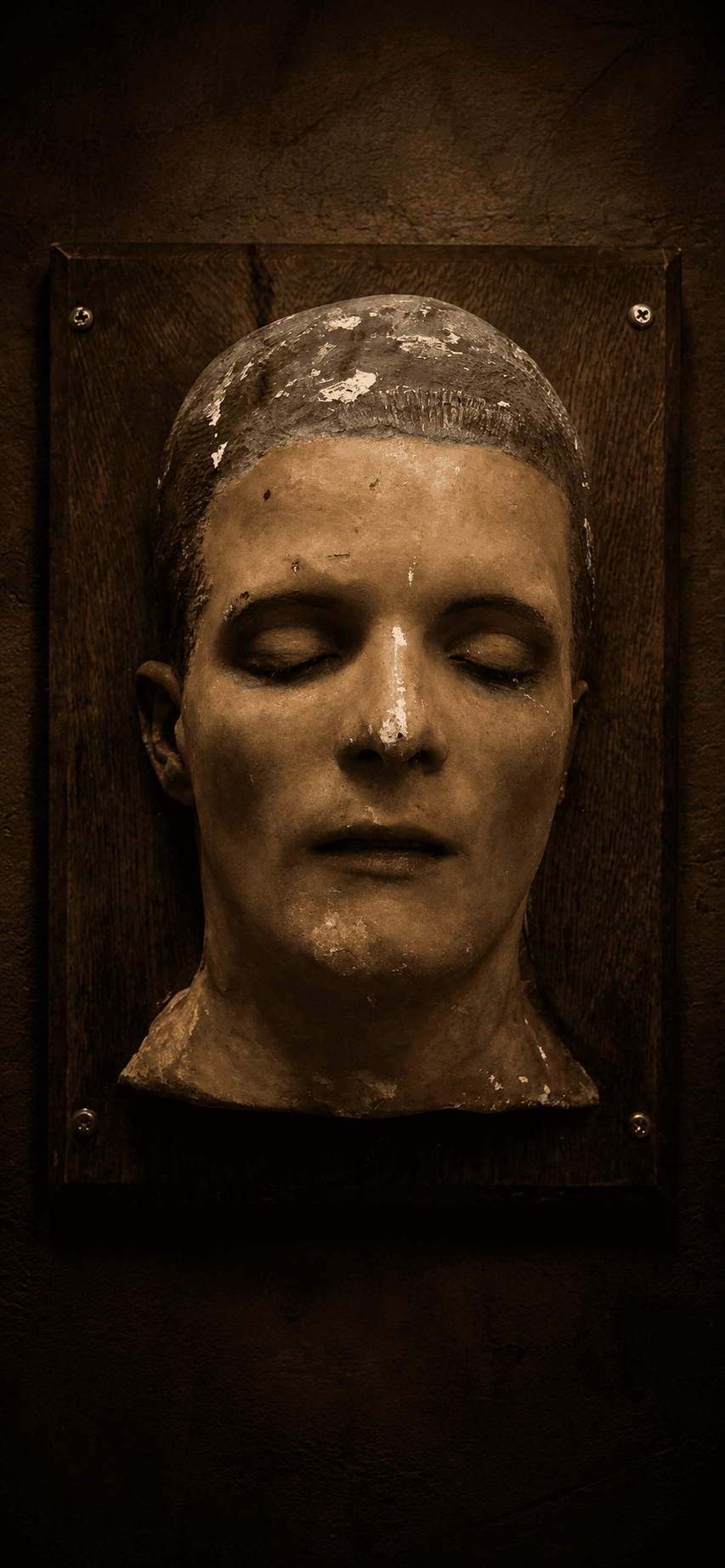
The Tattooed Man: Death Mask Displayed at the Great Lakes Exposition
Press Coverage of the Kingsbury Run Shantytown Raid
Records of the Frank Dolezal Arrest and Jail Death Inquiry
James Wagner was a sixteen-year-old Cleveland youth on September 23, 1935, when he and a younger companion raced each other down the steep, weed-choked slope of Jackass Hill into Kingsbury Run — a shortcut kids in the neighborhood took constantly. At the bottom of the embankment they found the naked, headless, emasculated body of a man lying in the brush. A short distance away lay a second male body in a far more advanced state of decomposition, the skin discolored a reddish hue by chemical treatment. The boys ran for help, and their discovery became the official starting point of the case. Wagner's account of the find was recorded by responding officers and reported in the Cleveland press at the time.
Peter Kostura was twelve years old and accompanying James Wagner down the Kingsbury Run embankment on the afternoon of September 23, 1935. He was among the first people to see the two men who would become known as Victims No. 1 and No. 2 — an unidentified male (Victim No. 1) and Edward Andrassy (Victim No. 2), following the numbering used in most accounts. Both had been decapitated, and the heads were recovered nearby, buried shallowly. Kostura's presence and account were documented in contemporary police reporting and newspaper coverage of the discovery. Because the two bodies appeared to have been killed weeks apart yet were placed within roughly thirty feet of one another, investigators concluded the site had been deliberately staged — a conclusion resting directly on what these two boys stumbled into.
SHOW 2 MORE WITNESS STATEMENTS
Gomez Ivey was an eleven-year-old boy playing near the railroad tracks in Kingsbury Run in June 1936 when he and another neighborhood child discovered a severed human head wrapped in trousers beneath a bush. The remains belonged to the victim who would become famous as the Tattooed Man — Victim No. 4 — whose body was recovered nearby the following day. Ivey's find gave police their best identification opportunity of the entire case: an intact face and six distinctive tattoos. Despite a death mask displayed to large crowds at the Great Lakes Exposition, the man was never identified. The circumstances of the discovery are recorded in Cleveland police accounts and period newspaper reporting.
On the bitterly cold morning of January 26, 1936, a local businessman arriving at his White Front Meat Market on East 20th Street found several bushel baskets and a burlap sack behind the neighboring Hart Manufacturing building. Inside were portions of a human body, packed in the snow. The remains were later identified through fingerprints as Florence Genevieve Polillo, a woman in her early forties who was known in the neighborhood — making her one of only three torso victims ever positively identified. Additional portions of her body were recovered from the same vicinity roughly two weeks later. The proprietor's discovery and the location details were documented in Cleveland Police Department reports and in extensive newspaper coverage of the case at the time.
Dr. Francis Sweeney — The Suspect Ness Couldn't Touch
The name most often attached to the case is Dr. Francis Edward Sweeney, a Cleveland physician and World War I veteran who had served in a military medical unit. He was an alcoholic, reportedly institutionalized repeatedly, and physically large enough to overpower the victims.
According to accounts later given by Eliot Ness and repeated by researcher Marilyn Bardsley and author Steven Nickel, Ness had Sweeney secretly detained at a downtown hotel and interrogated for days, during which polygraph pioneer Leonarde Keeler administered tests that Sweeney reportedly failed decisively. Shortly afterward, Sweeney voluntarily committed himself to a veterans' facility. The murders stopped.
The complication: Sweeney was a cousin of Congressman Martin L. Sweeney, a vocal political enemy of Ness. Charging him would have looked like vendetta, and the evidence was circumstantial. But if Sweeney was institutionalized voluntarily, he could have walked out at any time. Why didn't the killing resume?
Frank Dolezal — The Confession That Fell Apart
In July 1939, Cuyahoga County Sheriff Martin O'Donnell — working independently of Ness and the city police — arrested Frank Dolezal, a Bohemian immigrant bricklayer who had known victim Florence Polillo and had lived with her at one point. Under private interrogation in the sheriff's custody, Dolezal confessed.
The confession collapsed almost immediately. Details contradicted the coroner's findings, and Dolezal recanted, saying he had been beaten. Roughly seven weeks later he was found hanged in his cell — from a hook reportedly lower than his own height. The postmortem documented several rib fractures; officials attributed them to resuscitation efforts, while critics argued they were sustained during his time in custody.
Dolezal is generally regarded today as a scapegoat produced by a sheriff desperate for a headline. But his defenders note he was a butcher's helper by trade and knew at least one confirmed victim personally. Was he a convenient patsy — or did the sheriff stumble onto the right man and then destroy the case?
The Railroad Killer and the Pennsylvania Murder Swamp
Kingsbury Run wasn't just a gully — it was a rail corridor, a hobo highway feeding into Cleveland from across the industrial Midwest. Detective Peter Merylo, who worked the case longer than anyone, became convinced the killer moved by freight train and hunted among transients precisely because they vanished without paperwork.
Merylo pointed to a cluster of decapitated, dismembered bodies dumped in a swampy area near New Castle, Pennsylvania, roughly 75 miles southeast along the same rail lines — remains found intermittently from the 1920s into the 1940s. Similar victimology. Similar disposal. Similar total absence of heads.
If true, the Cleveland murders were one chapter of a much longer series, and the killings didn't stop in 1938 — they simply moved. The counterargument: dismemberment was a practical disposal method used by many killers, and rail-yard corpses were grimly common in the Depression. Coincidence, or a predator with a timetable?
A Butcher, Not a Doctor
County Coroner Samuel Gerber — who would later become nationally famous in the Sam Sheppard case — repeatedly emphasized that the dismemberments showed real anatomical knowledge. But knowledge of where joints separate is not exclusive to surgeons. Slaughterhouse workers, meat cutters, and morticians possess it too.
Cleveland in the 1930s had a large meatpacking district, and several victims were found near or connected to it. The disarticulations were clean but not delicate; some investigators have argued they resemble carcass breakdown more than surgical technique. A butcher would also have access to something the killer clearly had: a private, drainable workspace where a body could be bled out without leaving a scene.
This theory has the advantage of expanding the suspect pool beyond one convenient doctor. Its weakness is the same: it expands the pool to hundreds of men in a single industry, none of whom left a paper trail. Did Cleveland look for a monster in the wrong social class?
The Suppression — Why Nobody Was Ever Charged
The most uncomfortable theory isn't about who killed twelve people. It's about why a city that knew a name never used it.
The argument runs like this: Ness identified Sweeney, could not build a court-proof case, and understood that a failed prosecution of a congressman's cousin would end his own career. So an arrangement was reached — institutionalization instead of indictment. Sweeney reportedly sent taunting postcards to Ness for years afterward, which are referenced in later accounts of Ness's papers, though their provenance and current custody are not independently confirmed here. Ness never publicly named him.
The August 1938 shantytown burning, in which Ness led a raid that torched the Kingsbury Run flophouses and detained dozens of homeless men, has been read by some as theater — a public show of force from an official who already knew arrests wouldn't come.
But there's a plainer explanation: 1930s forensics simply couldn't convict on circumstantial evidence and a polygraph. Cover-up, or the limits of the era?
The murders are documented historical fact — the bodies, the coroner's reports, and the newspaper record are beyond dispute. What remains uncertain is the killer. Dr. Francis Sweeney failed a polygraph administered under Eliot Ness's supervision and had the medical skill the dismemberments required, but Ness's own account is secondhand and the physical evidence is thin. Frank Dolezal confessed under conditions that make the confession worthless, then died in custody, with rib fractures documented at postmortem. Ninety years on, the honest verdict is that Cleveland knows what happened but not who did it.