The Goatman of Lake Worth: Texas Terror on Greer Island
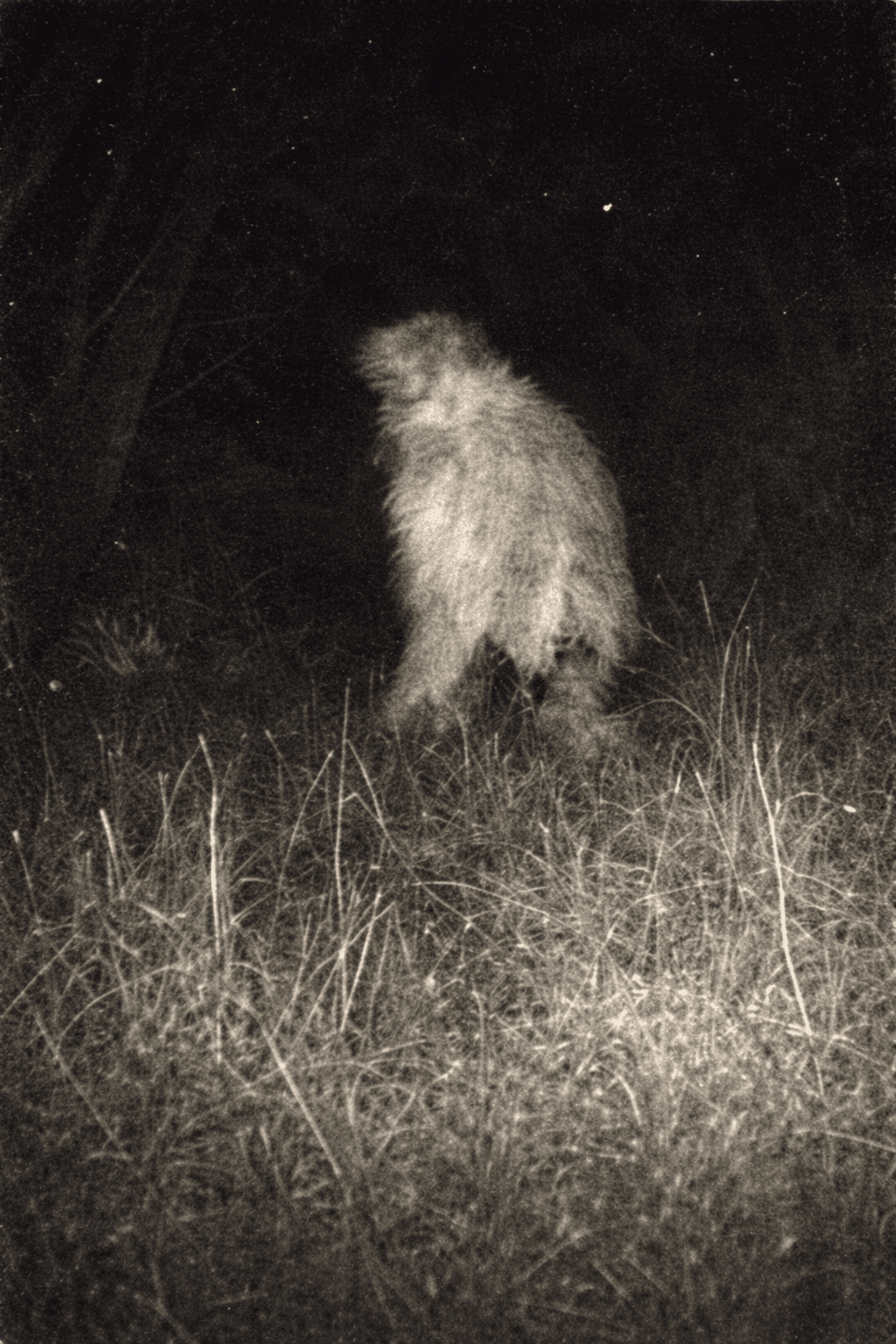
Half-man, half-goat creature terrorized Fort Worth couples in summer 1969. Multiple witnesses reported attacks, tire throwing, and encounters with the beast.
In the sweltering summer of 1969, couples seeking privacy along Lake Worth's remote shores encountered something that defied explanation. The creature stood seven feet tall with the body of a man but covered in white fur and sporting horns protruding from its head. Witnesses described glowing red eyes and the ability to leap across car hoods with supernatural agility. The beast allegedly threw a spare tire weighing several hundred pounds at terrified teenagers, leaving 18-inch scratches in car paint. Local police initially dismissed the reports until Deputy Sheriff Robert Stephens himself spotted the creature and gave chase. The sightings sparked a media frenzy and drew hundreds of curiosity seekers to the area. Allen Plaster's polaroid photograph, though blurry, appeared to show a white, bipedal figure among the trees. The encounters abruptly ceased after summer's end, leaving behind only unexplained tracks, damaged vehicles, and a legend that continues to haunt North Texas folklore.
Allen Plaster's Polaroid Photograph of Unidentified Figure
Fort Worth Police Department Incident Reports
Physical Evidence and Environmental Disturbances
Contemporary Media Coverage and Documentation
"I was driving patrol near the lake when I saw something moving through the trees that was definitely not human. It was much larger than a man and moved in a way I'd never seen before."
Deputy Sheriff Robert Stephens of the Tarrant County Sheriff's Department was responding to citizen reports of the creature when he had his own encounter in July 1969. As a law enforcement officer with years of experience distinguishing between legitimate threats and false alarms, his testimony carried significant weight with both colleagues and the media. Stephens was among the first officials to take the sightings seriously and file detailed incident reports.
"It was about seven feet tall and covered with whitish-gray hair. It had a face like a man but with long, dark hair hanging down over its forehead. When it saw our car lights, it stood up and looked directly at us with these glowing red eyes."
John Reichart was one of six teenagers parked near the lake on July 9, 1969, when they encountered the creature. He was with his girlfriend and two other couples seeking a quiet spot away from the city. Reichart, described by police as a credible witness with no history of making false reports, provided one of the most detailed descriptions of the creature's physical appearance and behavior.
SHOW 2 MORE WITNESS STATEMENTS
"That thing picked up a spare tire from the back of someone's truck and threw it at our car. I've never seen anything with that kind of strength. We got out of there as fast as we could."
Jack Harris was among a group of young people who ventured to Lake Worth seeking to glimpse the creature in July 1969. Working as a mechanic at a local garage, Harris had experience with heavy automotive parts and understood the significant strength required to lift and throw a spare tire. His account of the creature's physical capabilities became one of the most dramatic elements of the Lake Worth Monster legend.
"I saw it standing there among the trees, just watching us. It was definitely not human - too tall, wrong proportions. That's when I grabbed my camera and took the shot."
Allen Plaster was an amateur photographer and local resident who had been following the monster reports with keen interest. On the night of July 10, 1969, he positioned himself with friends near Greer Island hoping to document the creature. Plaster's background in photography made him particularly focused on capturing evidence, and his Polaroid image became the case's most famous piece of documentation despite its controversial and indistinct nature.
Genuine Cryptid Entity
Cryptozoologists propose the Lake Worth Monster represents an unknown species of bipedal primate, possibly related to Bigfoot or Skunk Ape variants. This theory, supported by researchers like Lyle Blackburn, points to consistent witness descriptions, physical evidence, and the creature's apparent territorial behavior around Greer Island.
The white fur coloration distinguishes it from other cryptid reports, suggesting either a regional subspecies or seasonal adaptation. The creature's aggressive behavior - throwing objects and chasing vehicles - indicates intelligence and strength beyond known wildlife.
However, critics question why no similar creatures have been documented before or since. If a breeding population existed, where are the additional sightings or remains? The theory struggles to explain the creature's complete disappearance after 1969.
Misidentified Known Animal
Wildlife biologists suggest witnesses encountered a large bear or escaped exotic animal under poor lighting conditions. Texas is home to black bears that can appear whitish in moonlight, and bears regularly stand bipedally when investigating scents or threats.
The 1960s saw increased private exotic animal ownership in Texas with minimal regulation. An escaped goat, llama, or even ape from private collections could explain the unusual appearance and behavior patterns. The creature's white coloration might result from albinism or leucism in a known species.
This theory explains the temporary nature of sightings - an injured or disoriented animal eventually died or found new territory. However, it fails to account for the creature's reported size, incredible jumping ability, and object-throwing behavior witnessed by multiple independent sources including trained law enforcement.
Elaborate Hoax or Prank
Skeptics argue the Lake Worth Monster was an elaborate hoax orchestrated by local teenagers or college students during the counterculture era of 1969. The isolated location and night-time sightings provided perfect conditions for costume-based deception.
The sudden media attention following initial reports created a feedback loop - as news spread, more people visited the area expecting to see something unusual, leading to additional false sightings. The Allen Plaster photograph could easily show a person in costume among the trees.
Proponents note the sightings completely stopped once media attention waned, suggesting human orchestration rather than a genuine creature. However, this theory struggles to explain law enforcement sightings, the physical strength required to throw heavy objects, and why no hoaxers ever came forward to claim credit for one of Texas's most famous cryptid cases.
Mass Hysteria and Social Contagion
Psychologists propose the Lake Worth Monster represents a case of mass hysteria triggered by initial misidentified sightings and amplified by media coverage. The summer of 1969 was marked by social upheaval, moon landing excitement, and heightened public interest in the unexplained.
Once the first reports circulated, suggestion and expectation primed subsequent witnesses to interpret normal stimuli as monster encounters. Pareidolia - seeing patterns in random stimuli - could explain the Plaster photograph showing a person-like figure in shadows and foliage.
This theory accounts for the consistent descriptions (shared cultural expectations) and the eventual cessation of reports (media attention moved elsewhere). However, it cannot easily explain the physical evidence like thrown objects, vehicle damage, and unexplained tracks, unless these were separately fabricated or misattributed to the creature after occurring from mundane causes.
Interdimensional or Paranormal Entity
Paranormal researchers suggest the Lake Worth Monster was a temporary manifestation from another dimension or spiritual plane. This theory, explored by investigators like John Keel, proposes that certain locations serve as dimensional doorways where entities can briefly materialize in our reality.
The creature's sudden appearance and equally sudden disappearance align with window area phenomena reported at other cryptid locations. The aggressive behavior and superhuman abilities suggest a non-physical origin constrained by temporary materialization in our dimension.
The 1969 timeframe coincides with reported increased paranormal activity worldwide, possibly linked to heightened human consciousness during the space age. However, this theory lacks scientific framework for testing and relies heavily on anecdotal evidence. Critics argue it's an unfalsifiable hypothesis that explains everything while proving nothing, making it scientifically meaningless despite its cultural appeal.
The Lake Worth Monster presents a compelling case with multiple credible witnesses including law enforcement officers and consistent physical descriptions. The Allen Plaster photograph, while controversial, shows an unidentified white figure in the reported location. However, the sudden cessation of sightings and lack of definitive physical evidence raises questions. The 1969 timeframe coincides with heightened media attention to unexplained phenomena, potentially influencing witness accounts. Some researchers suggest misidentification of known animals or elaborate hoax, yet the involvement of police officers and physical evidence like thrown objects and scratches suggests something genuinely occurred at Lake Worth.