The Loveland Frogman: Ohio's Bipedal Amphibian Terror
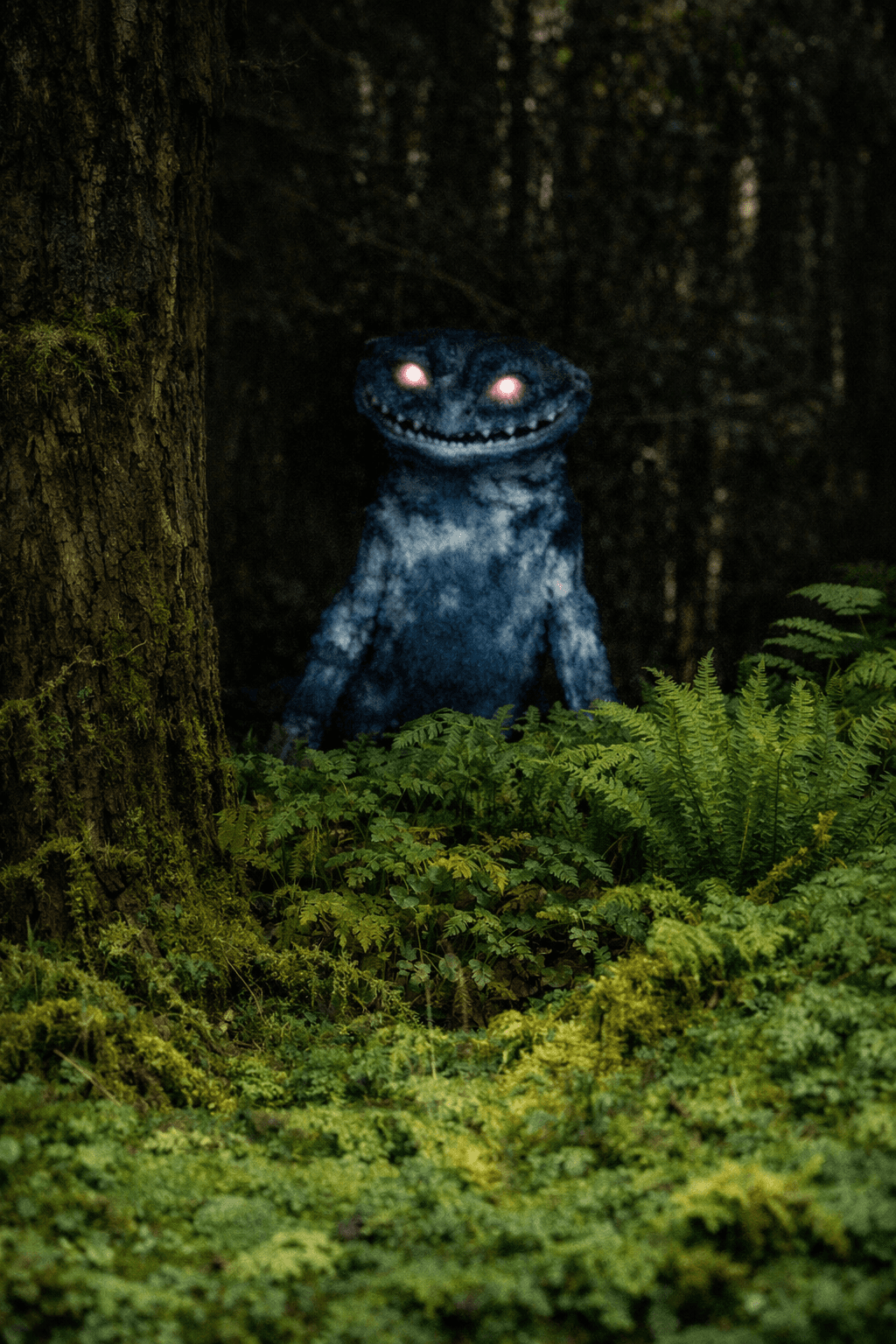
Multiple police officers encounter humanoid amphibian creatures along Ohio's Little Miami River. Credible witnesses spark decades of investigation.
On March 3, 1972, Officer Ray Shockey was driving along Riverside Drive near the Little Miami River when his headlights illuminated something extraordinary. A four-foot-tall humanoid creature with leathery skin and a frog-like face crouched beside the road. The being stood upright and stepped over the guardrail with unusual agility before disappearing into the river.
Two weeks later, Officer Mark Matthews encountered a similar creature in the same area. This time, the being was lying in the road, apparently injured. When Matthews' patrol car approached, the creature stood on its hind legs and limped toward the guardrail. Matthews later claimed he shot at it, though he would eventually recant parts of his story.
These 1972 incidents weren't isolated. In 1955, a businessman reported seeing three similar creatures under the Loveland bridge, describing them as having webbed hands and sparking devices. The consistent reports from credible witnesses have made the Loveland Frogman one of Ohio's most enduring cryptid mysteries.
Loveland Police Department Incident Reports
- EVENT
- March 1972
- STATEMENT
- unverified
- ESTABLISHES
- Nothing that has been produced. No Loveland PD report from March 1972 has been published or independently examined in this archive.
- DOES NOT
- That a contemporaneous police record of the encounter exists. The item is named as a document but no copy, citation or archive reference accompanies it.
Historical 1955 Businessman Account
- EVENT
- 1955
- STATEMENT
- unrecorded
- ESTABLISHES
- Nothing. The account is anonymous and no original publication or date of recording is given.
- DOES NOT
- That a 1955 sighting occurred. An unattributed account cannot corroborate the 1972 reports, though it is routinely cited as doing so.
Little Miami River Environmental Survey
- EVENT
- 1970s–1980s
- STATEMENT
- 1970s–1980s
- ESTABLISHES
- The species and habitat conditions recorded along the Little Miami River in the period.
- DOES NOT
- Anything about the sightings. A habitat survey is context, not evidence for or against a creature — it is not about this case at all.
Officer Matthews' Later Recantation Statement
- EVENT
- March 1972
- STATEMENT
- later interviews, cited to 2016
- ESTABLISHES
- That Matthews subsequently stated the animal he shot was a large iguana that had lost its tail, and that the story had grown beyond what he reported.
- DOES NOT
- What Shockey saw. Matthews’ retraction concerns his own sighting only. The citation here is to "various researchers" rather than a specific interview.
- EVENT
- March 1972
- STATEMENT
- reported at the time; detail from later interviews
- ESTABLISHES
- That a Loveland police officer reported seeing an unusual animal by the river in March 1972.
- DOES NOT
- The creature’s description. The detailed accounts circulating derive from interviews given long afterwards, not from a 1972 statement on record here.
"It had leathery skin, and it stood about four feet tall. When my headlights hit it, the thing stood up on its hind legs and stepped over the guardrail into the river."
Shockey was a veteran Loveland police officer with over ten years of service and no history of filing unusual incident reports. His encounter occurred during a routine patrol on March 3, 1972, at approximately 1:00 AM along Riverside Drive. Shockey immediately radioed the incident and filed an official report, describing the creature's frog-like face and bipedal locomotion. His detailed account became the foundation for subsequent investigations and established the modern Loveland Frogman legend.
- EVENT
- March 1972
- STATEMENT
- reported at the time; later retracted
- ESTABLISHES
- That Matthews reported an encounter in 1972.
- DOES NOT
- The creature account. Matthews himself later identified the animal as an iguana — this statement should be read together with his retraction.
"I saw something lying in the road. When I got closer, it stood up on its back legs and went to the guardrail. I shot at it but I don't know if I hit it."
Matthews was Shockey's fellow officer who encountered a similar creature two weeks later at the same location on March 17, 1972. His incident occurred during late evening patrol, and he initially described the being as having the same general characteristics as Shockey's encounter. Matthews later suggested in unofficial interviews that he may have encountered an escaped iguana, though his original police report maintained the creature's unusual nature. He served the Loveland Police Department for over fifteen years.
SHOW 2 MORE WITNESS STATEMENTS
- EVENT
- 1955
- STATEMENT
- unrecorded
- ESTABLISHES
- Nothing. Anonymous, undated as to recording, with no publication of record.
- DOES NOT
- Anything. This is the weakest item in the file and is nonetheless the basis for dating the phenomenon to 1955.
Context only - no verified quote available.
This unnamed witness allegedly observed three humanoid creatures under the Loveland bridge in 1955, making his account the earliest known Frogman sighting. He reportedly described the beings as having webbed hands and carrying sparking devices or wands. The witness claimed to watch them for several minutes from his vehicle before they noticed him and moved toward the water. His identity was never officially recorded, and no police report was filed at the time. The account appears primarily in cryptozoological literature rather than contemporary documentation.
- EVENT
- various
- STATEMENT
- unrecorded
- ESTABLISHES
- Nothing. No name, no date, no source.
- DOES NOT
- Anything. An unnamed composite account cannot establish a pattern of sightings.
Context only - various unverified reports exist.
Multiple area residents have reported brief sightings of unusual creatures near the Little Miami River over the decades, though most accounts lack the detail and credibility of the police reports. These witnesses typically describe glimpses of bipedal figures near the water during evening hours. Most reports come from fishermen and late-night travelers along Riverside Drive. However, none of these civilian accounts were officially documented by police, and witness identities often remain anonymous, making verification impossible.
Misidentified Wildlife Theory
Skeptics propose the Frogman sightings represent misidentified known animals, particularly large iguanas or monitor lizards. Officer Matthews himself later suggested his encounter involved an escaped iguana that appeared larger and more threatening in the darkness and adrenaline of the moment.
This theory gains support from the fact that exotic pets occasionally escape, and the Little Miami River's environment could temporarily sustain a large reptile. The bipedal stance described by witnesses aligns with how iguanas rear up when threatened, and their textured skin could appear amphibian-like under poor lighting conditions.
However, this explanation struggles with the consistent four-foot height reported across incidents and the creature's apparent comfort in water. Would multiple trained officers really mistake a common reptile for something so extraordinary?
Surviving Prehistoric Amphibian
Cryptozoologists suggest the Loveland Frogman could represent a surviving prehistoric amphibian or an unknown species that evolved in isolation. The Little Miami River system provides extensive cave networks and secluded waterways where such creatures might remain hidden.
Proponents point to the detailed consistency of witness descriptions across different time periods, arguing this indicates a real biological entity rather than folklore. The creature's reported bipedal locomotion and semi-aquatic nature would represent a unique evolutionary adaptation, similar to theorized proto-humans.
Critics note the complete absence of physical evidence - no bones, shed skin, or definitive tracks despite decades of searching. If a breeding population existed, wouldn't there be more frequent sightings or some physical trace?
Military Experiment Cover-up
Some researchers propose the Frogman represents evidence of classified military experiments involving genetic manipulation or biological warfare research. Wright-Patterson Air Force Base, located just 30 miles from Loveland, has long been associated with secretive government projects beyond aerospace.
This theory suggests the creatures could be escaped test subjects from biological enhancement programs, explaining their unusual anatomy and apparent intelligence. The government's lack of investigation into credible police reports might indicate official knowledge of the incidents' true nature.
However, no whistleblowers have come forward, and the technology required for such genetic manipulation would have been extremely advanced for the 1970s. Why would experimental subjects consistently appear in the same public location rather than being quickly recovered?
Interdimensional Visitor Theory
Paranormal researchers propose the Frogman represents an interdimensional being that occasionally manifests in our reality through natural portals or dimensional thin spots. The Little Miami River area allegedly contains several locations with reported anomalous phenomena, creating a "window area" for such appearances.
This theory attempts to explain the sporadic nature of sightings and the creature's ability to seemingly vanish without a trace. Proponents argue the being's amphibian characteristics might represent how an otherworldly intelligence appears when filtered through our dimensional perspective, similar to how witnesses describe otherworldly entities.
Skeptics dismiss this as unfalsifiable pseudoscience that relies on unproven concepts like parallel dimensions. If interdimensional travel were possible, why would such advanced beings appear as primitive amphibian creatures rather than more sophisticated forms?
Hoax and Folklore Evolution
Sociologists suggest the Loveland Frogman represents a modern folklore creation that evolved from initial pranks or misunderstandings into accepted local legend. The 1955 businessman's account lacks verification and may represent early urban legend development, while the police encounters could have been influenced by existing folklore expectations.
This theory proposes that suggestion and expectation led officers to interpret normal wildlife encounters through the lens of existing Frogman stories. The case demonstrates how modern media and investigator attention can amplify and legitimize initially questionable reports, creating self-reinforcing belief systems.
Yet this explanation must account for why trained police officers would risk professional credibility by filing official reports about folkloric creatures. The initial witnesses had no apparent motive for fabrication and seemed genuinely disturbed by their encounters.
The Loveland Frogman case presents compelling witness testimony from trained police officers, lending significant credibility to the reports. However, Officer Matthews later suggested his encounter may have been a large iguana, and skeptics note the lack of physical evidence. The 1955 sightings remain completely unverified. While hoaxes and misidentification seem likely, the consistency of descriptions across different time periods and the initial credibility of the witnesses prevent outright dismissal. The case exemplifies how even credible testimony can become muddied by time and retelling.