The Loch Ness Monster
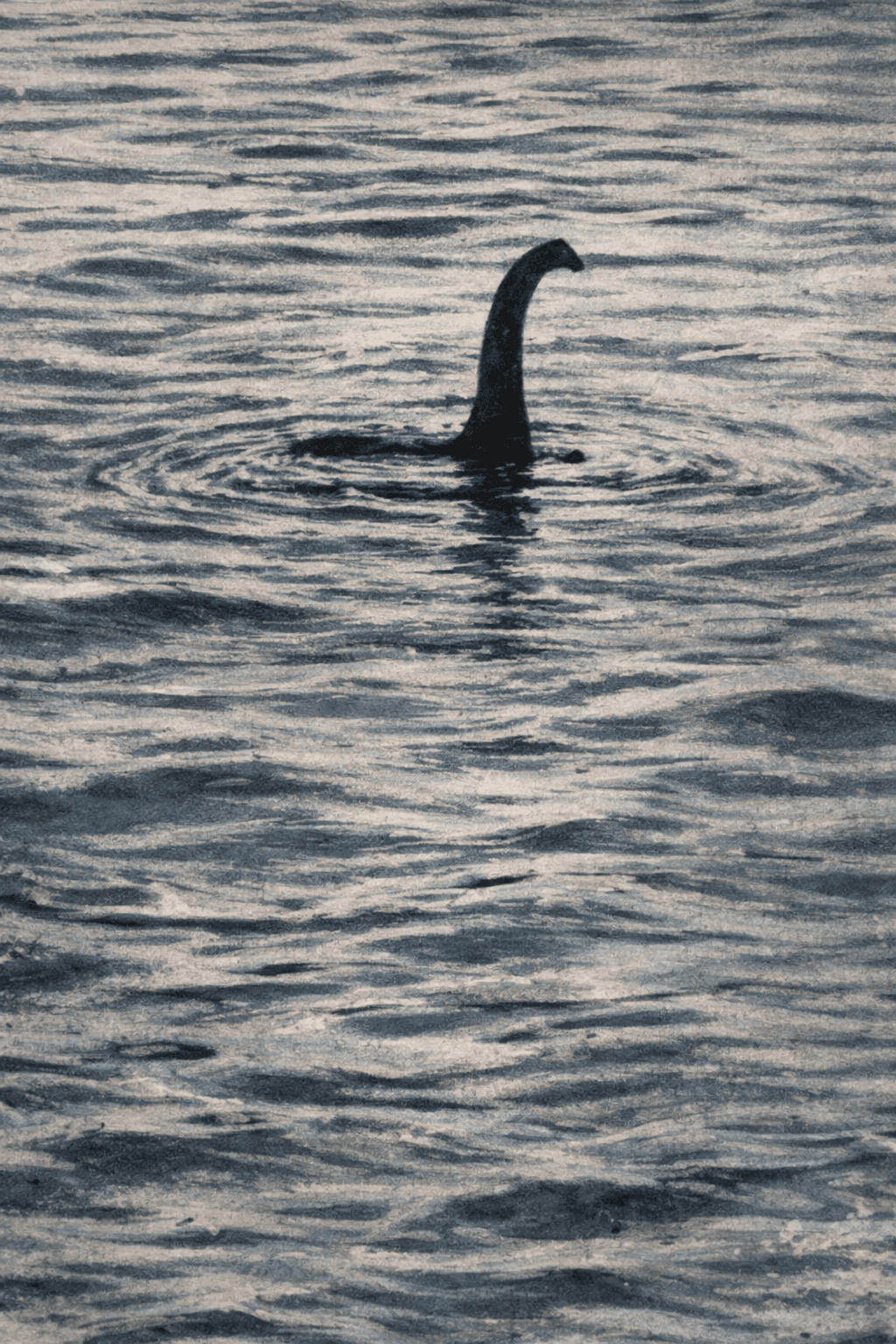
Since at least 1933, witnesses around Scotland’s Loch Ness have reported a large, unknown creature in the deep, dark water. Grainy photos, sonar hits, and folklore keep the question alive: is Nessie real, or just a very successful legend?
Loch Ness is a long, narrow freshwater lake in the Scottish Highlands, stretching about 23 miles and plunging to depths over 750 feet, with famously murky water that hides almost anything below the surface. Reports of a strange creature go back to local lore and even a 6th‑century story about St. Columba confronting a “water beast” in the River Ness.
The modern Nessie craze began in April 1933, when a local couple, John and Aldie Mackay, reported seeing a large animal rolling and plunging on the loch’s surface, a story that hit newspapers and triggered a media storm. Later that year, George Spicer described a massive, long‑necked creature crossing the road near the loch, feeding the idea of a surviving plesiosaur‑type animal.
In 1934, the famous “Surgeon’s Photograph” appeared to show a long neck and small head rising from the water, becoming the defining Nessie image for decades before being exposed as a hoax in the 1990s. Even so, sonar “contacts” in the 1970s and periodic video clips keep the legend alive, with tourists, cryptozoologists, and skeptics all flocking to the shore.
Despite multiple expeditions—some privately funded, some semi‑official—no definitive biological evidence has been produced. Yet the combination of deep, dark water, a long history of sightings, and the sheer cultural weight of Nessie makes this one of the world’s most enduring cryptid cases.
The Surgeon’s Photograph
1970s Sonar & MIT “Flipper” Photos
2020 Cruise Loch Ness Sonar Scan
Environmental DNA Survey
“It was like a great creature rolling and plunging, sending up waves that spread across the loch. I’d watched boats all my life, and this was no boat. Whatever it was, it moved with a kind of heavy, living weight that made the water heave.”
“We saw the most extraordinary form of animal cross the road about twenty-five yards in front of the car. It had a long neck, thick like an elephant’s trunk, and a large, bulky body, shuffling toward the loch. There were no visible limbs, just this great, lurching mass.”
SHOW 2 MORE WITNESS STATEMENTS
“At first I thought it was just a wave, but then the ‘wave’ changed direction against the wind. I saw two dark humps rise and fall in sequence, like something swimming just under the surface. It lasted maybe ten seconds—but it was enough to make my heart race.”
“When the man was in mid‑stream, the water beast rushed at him with a great roar, its mouth open. At this, the blessed Columba made the sign of the cross and commanded the creature to go no further. The beast fled in terror, as if pulled back by ropes.”
Surviving Plesiosaur
This classic theory says Nessie is a relict plesiosaur, a marine reptile that somehow survived extinction and adapted to freshwater. The long neck, bulky body, and hump sightings fit the popular image, and the loch’s depth seems like a perfect hiding place. The problem: air‑breathing plesiosaurs would surface frequently and need a viable breeding population, which has never been observed.
Giant Eel Population
Some researchers argue Nessie could be oversized eels, or a small population of unusually large ones, producing long, serpentine shapes at the surface or on sonar. Eels are known in the loch, and modern eDNA studies found plenty of eel DNA—but nothing clearly “monster‑sized.” Still, a freakishly big eel or odd group behavior could explain many sleek, dark, undulating sightings.
Seals, Sturgeon, and Misidentifications
This theory treats Nessie as a composite creature made from many normal animals: visiting seals, large fish like sturgeon, birds, and even deer swimming across the loch. At long distances in choppy water, a seal’s head or a line of waves can look like humps or a neck. Add fog, low light, and a primed imagination, and a mundane animal turns into a monster.
Hoaxes and Media Feedback Loop
From the “Surgeon’s Photograph” hoax to staged humps and planted props, hoaxers have repeatedly fed the myth for attention and tourism. Each new photo or video, even when debunked, keeps Nessie in the news. This creates a feedback loop: more visitors, more cameras, more “evidence,” and more chances for innocent mistakes to be framed as monster encounters.
Folklore, Psychology, and Expectation
Here, Nessie is mostly in the mind, not the water. A long tradition of Scottish water‑spirit legends, like the kelpie, primes locals and tourists to expect something uncanny in deep lochs. Once the monster story took off in the 1930s, every odd ripple or distant shape could be “Nessie.” The loch became a projection screen for human hopes, fears, and love of mystery.
There is almost certainly no giant prehistoric reptile cruising around Loch Ness; the lake’s ecology, food supply, and the lack of clear photos or bodies all argue against that. But something is happening here: odd sonar hits, recurring witness descriptions, and the sheer volume of reports suggest real stimuli—just not necessarily a monster. The most likely scenario is a mix of large fish, seals, waves, and expectation‑primed observers creating a self‑reinforcing legend. Still, in that deep, peat‑dark water, it’s hard to say for sure—and that uncertainty is exactly why Nessie refuses to die.