Operation Lake Serpent: The Ogopogo Investigation Files
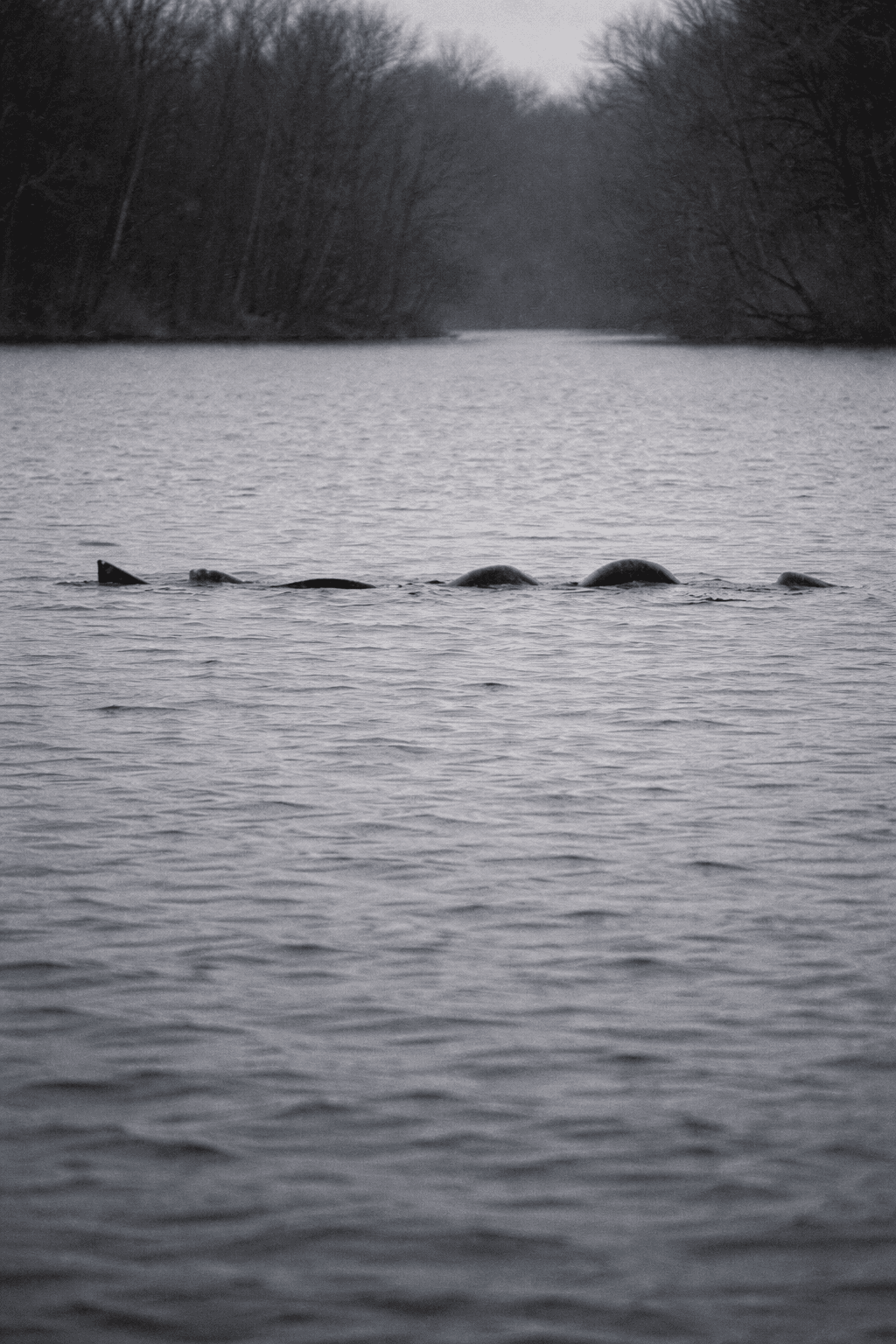
Canada's most documented lake monster. Over 200 reported sightings since 1872 in British Columbia's Okanagan Lake.
For over 150 years, witnesses have reported encounters with a massive serpentine creature in British Columbia's Okanagan Lake. The indigenous Syilx people called it N'ha-a-itk, meaning "lake demon," and considered the lake sacred. Modern sightings began in 1872 when settler Susan Allison reported a creature with "the head and tail of a serpent."
The phenomenon gained international attention in 1926 when 30 carloads of people simultaneously witnessed the creature near Okanagan Mission. Video evidence emerged in 1968 when tourist Art Folden filmed something moving through the water. Government involvement surfaced in 1984 when the British Columbia Ministry of Environment investigated sonar contacts showing large moving objects at depths exceeding 100 feet. Recent encounters include 2011 smartphone footage and ongoing hydrophone recordings of unexplained underwater sounds.
Art Folden 8mm Film Footage
Ministry of Environment Sonar Survey Results
RCMP Incident Report Database
Hydrophone Audio Recordings & Analysis
"I saw the head and tail of a serpent. It was about five feet out of water, and its head was much larger than that of a seal."
Susan Allison was a pioneer settler and the first documented European witness to Ogopogo in 1872. As the wife of cattleman John Fall Allison, she was considered a reliable observer familiar with local wildlife. Her encounter occurred while traveling by horseback along the eastern shore of Okanagan Lake near present-day Peachland. Allison's account established the template for future descriptions and marked the beginning of recorded European sightings.
"The thing was enormous, at least 75 feet long. It moved through the water with tremendous speed, creating a wake like a speedboat."
Roy W. Brown was a Victoria businessman and respected member of the Okanagan Valley community. His sighting on August 15, 1926, involved approximately 200 witnesses in 30 automobiles who had gathered at Okanagan Mission following earlier reports. Brown's account was corroborated by multiple independent witnesses including local officials and visiting dignitaries. The mass sighting event gained international media attention and remains one of the most well-documented Ogopogo encounters.
SHOW 2 MORE WITNESS STATEMENTS
"I observed a wake being made by something substantial under the water. When the creature surfaced, I could see it was dark green with a series of humps along its back."
Arlene Gaal was a professional writer and local historian who became one of Canada's leading Ogopogo researchers. Her 1986 encounter occurred while she was conducting research for her book about the creature. Gaal's academic background and methodical documentation of her experience added scientific credibility to witness testimony. She subsequently authored multiple books on the subject and established the Ogopogo Research Society to investigate reports systematically.
"It had to be at least 40 feet long, moving in vertical undulations through the water. The head was clearly visible above the surface."
Benjamin Reedy was a professional fishing guide with over 20 years experience on Okanagan Lake. His July 2011 encounter was filmed using smartphone video and subsequently analyzed by cryptozoologists. As someone intimately familiar with local marine life and water conditions, Reedy's testimony carried significant weight among investigators. The accompanying video footage showing a large dark object moving through the water became widely circulated on social media platforms and news outlets.
Undiscovered Lake Serpent Species
Cryptozoologist Dr. Roy Mackal proposed Ogopogo represents a relict population of primitive whales or zeuglodons that survived in the isolated lake system. His 1983 expedition documented consistent creature descriptions: 30-70 feet long, dark green coloration, and undulating locomotion inconsistent with known fish species.
Marine biologist Dr. Paul LeBlond of the University of British Columbia supports the unknown species hypothesis, noting Okanagan Lake's unique ecosystem could sustain large aquatic life. The lake reaches depths of 761 feet with extensive underwater cave systems providing potential habitat.
However, population genetics raises questions about breeding viability in an isolated environment. Critics argue the food chain couldn't support creatures of reported size, though recent discoveries of deep-lake ecosystems challenge traditional assumptions about carrying capacity.
Geological Seismic Activity
Geologist Dr. Susan Conway of the Geological Survey of Canada theorized that underwater seismic events create surface disturbances resembling living creatures. Okanagan Lake sits on an active fault line with documented micro-earthquakes causing underwater gas releases and sediment displacement.
Hydrogeologist Michael Hale documented underwater methane vents that produce bubble trains reaching the surface. These phenomena, combined with wind patterns and light refraction, could create serpentine illusions. The theory explains multiple simultaneous sightings as witnesses observing the same geological event.
Yet this fails to account for detailed anatomical descriptions provided by witnesses, including visible eyes, defined head shapes, and coordinated movement patterns inconsistent with random geological disturbances.
Misidentified Known Species
Wildlife biologist Dr. Jeremy Wade suggests sightings represent misidentified sturgeon populations or floating logs enhanced by expectation bias. White sturgeon can reach 20 feet and surface occasionally, creating serpentine appearance when partially submerged. Beaver dam debris and waterlogged timber could account for stationary sightings.
Psychology professor Dr. Christopher French notes pattern recognition errors where witnesses interpret ambiguous stimuli through cultural expectations. The media attention surrounding Ogopogo creates a suggestion effect, where ordinary lake phenomena become monster encounters.
This theory struggles with professional witness testimony from marine experts familiar with local wildlife, and fails to explain consistent behavioral descriptions across unconnected witness groups.
Government Biological Testing
Former military contractor David Morrison alleged that classified experiments by the Canadian Defence Research Establishment involved genetically modified aquatic specimens released into remote lakes during Cold War biological weapons research. Declassified documents from 1958-1962 reference "Project Aquatic" with budgets allocated for "environmental containment studies."
Whistleblower testimonies describe transport of large specimens to Okanagan research facilities in the 1960s. The theory suggests escaped test subjects established a breeding population, explaining the creature's intelligence and avoidance behavior reported by witnesses.
However, no definitive documentation links these programs specifically to lake monster phenomena, and government denials make verification impossible. The timing correlation between increased sightings and known research periods remains circumstantial evidence.
Interdimensional Portal Phenomenon
Paranormal researcher Stan Gordon theorizes that Okanagan Lake contains an interdimensional gateway allowing creatures from parallel realities to temporarily manifest. He cites electromagnetic anomalies recorded by Environment Canada during peak sighting periods, including compass deviations and electronic equipment malfunctions.
Quantum physicist Dr. Jack Sarfatti suggests spacetime distortions in geologically active areas could create dimensional rifts. This would explain the creature's intermittent appearances, varying size descriptions, and ability to vanish without trace. Native legends of N'ha-a-itk as a supernatural entity support this interpretation.
Skeptics argue this theory relies on unproven physics and unfalsifiable claims. The lack of corresponding dimensional evidence and absence of other anomalous phenomena make this the most speculative explanation, though it uniquely addresses the creature's elusive nature.
The consistency of eyewitness accounts across multiple generations, combined with unexplained sonar evidence and indigenous historical records, suggests an unidentified phenomenon in Okanagan Lake. However, lack of definitive physical evidence prevents confirmation. The sheer volume of reports from credible witnesses including police officers, scientists, and government officials indicates something beyond mass hallucination. Whether unknown species, environmental phenomenon, or misidentification remains undetermined.