The Hessdalen Lights: Norway's Unexplained Aerial Phenomenon
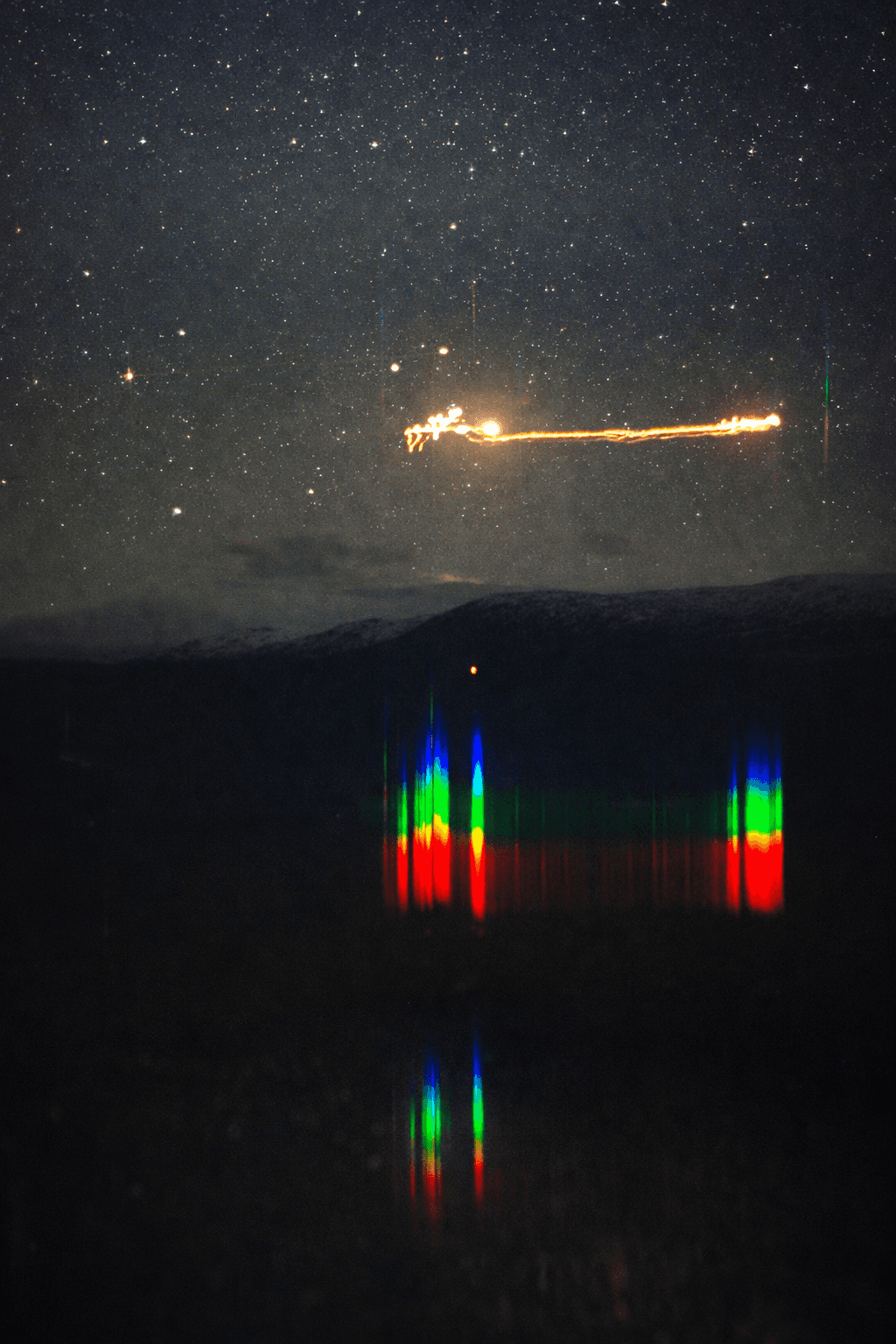
Since 1981, mysterious lights have appeared regularly in Norway's Hessdalen Valley. Despite decades of scientific study, the phenomenon remains unexplained.
The Hessdalen Lights represent one of the world's most documented unexplained phenomena. Beginning in 1981, residents of Norway's remote Hessdalen Valley began reporting strange lights appearing in the sky with unprecedented frequency - sometimes 20 sightings per week. These weren't fleeting glimpses; witnesses described structured objects, dancing orbs, and brilliant flashes that could last for hours. What makes Hessdalen unique is the scientific response. Rather than dismissing reports, Norwegian researchers established Project Hessdalen in 1983, installing sophisticated monitoring equipment throughout the valley. The automatic measurement station, operational since 1998, has captured thousands of unexplained readings. Despite decades of study involving radar, spectrometers, and magnetometers, the lights continue to defy conventional explanation. The phenomenon occurs year-round, with no correlation to weather patterns, solar activity, or human activity.
Automatic Measurement Station Electromagnetic Data
Italian Scientific Team Video Documentation
Norwegian Defence Research Establishment Radar Tracking
Time-Lapse Photography Collection
Blue Box Automated Surveillance Footage
"I was outside feeding the animals when I saw this enormous light coming toward our farm. It was bigger than a house and completely silent. It stopped right above our barn and hovered there for twenty minutes before slowly moving away toward the mountains."
Ragnhild Tenden was a local farmer living in Hessdalen Valley during the peak activity period of the early 1980s. She witnessed multiple light phenomena over several years while conducting daily farm chores, making her one of the most experienced observers of the early manifestations. Her detailed descriptions helped researchers understand the lights' behavioral patterns and proximity to human habitation.
"Through binoculars, we could see it wasn't just a light - it had structure. There were different colored sections, and it seemed to be rotating slowly. This was no aircraft I'd ever seen, and I've been watching planes my whole life."
Bjørn Gitle Hauge was a local resident and amateur astronomer who became one of the founding members of Project Hessdalen in 1983. His detailed observations and technical background helped distinguish the phenomena from conventional aircraft or astronomical objects. He witnessed the lights on over thirty occasions during the intensive study period and contributed to establishing the scientific monitoring program.
SHOW 1 MORE WITNESS STATEMENT
"The light followed our car for almost five kilometers along the valley road. Every time my husband slowed down, it slowed down. When he accelerated, it kept pace perfectly. It was like it was curious about us."
Marit Jørgen was traveling through Hessdalen Valley with her family in 1985 when they encountered one of the interactive light phenomena. As a school teacher with no prior interest in UFO phenomena, her credible testimony helped establish that the lights exhibited apparent intelligence or responsiveness. Her account is frequently cited in research papers as evidence of the phenomenon's interactive behavior.
Piezoelectric Plasma Theory
Geologist Erling Strand and Italian researchers propose that piezoelectric effects in the valley's quartz-rich rocks generate electrical fields when subjected to tectonic stress. These fields could ionize atmospheric gases, creating plasma formations that appear as structured lights.
The theory explains the lights' tendency to appear along specific geological formations and their electromagnetic signatures detected by monitoring equipment. Laboratory experiments have successfully created similar plasma phenomena under controlled conditions.
However, critics note that natural piezoelectric effects typically produce brief discharges, not the sustained formations lasting hours that characterize Hessdalen. The theory also struggles to explain the lights' apparent intelligent behavior and complex movement patterns.
Atmospheric Battery Hypothesis
Scientists propose that Hessdalen's unique geography creates a massive atmospheric battery. The valley's metallic ore deposits, combined with the river and specific atmospheric conditions, could generate electrical potential differences large enough to produce visible phenomena.
This theory, developed by Italian physicist Massimo Teodorani, suggests that temperature inversions trap ionized particles, creating conditions similar to a natural capacitor. The stored electrical energy would discharge as luminous plasma formations.
Yet the hypothesis fails to account for the lights' structured appearance and purposeful movement patterns. If purely electrical, the phenomena should be more chaotic and short-lived, unlike the organized displays frequently observed.
Exotic Matter Interaction
Theoretical physicist Erling Strand has proposed that the lights might result from interactions with exotic matter or unknown particles. This theory suggests that certain atmospheric conditions in Hessdalen allow normally invisible particles to become luminous through electromagnetic excitation.
The hypothesis draws support from spectral analysis showing unusual emission lines that don't match known atmospheric components. Some readings suggest elements or compounds not typically found in Earth's atmosphere at observable concentrations.
Skeptics argue this theory ventures into speculation without sufficient evidence. The exotic matter explanation essentially admits current science cannot explain the phenomenon, raising questions about whether we're dealing with natural processes or something more extraordinary.
Combustible Gas Emissions
Some researchers propose that methane or hydrogen gas emissions from underground sources could account for the lights. These gases, when ignited by static electricity or other sources, would create the observed luminous phenomena in the valley's atmosphere.
Proponents point to the valley's geological composition and the presence of water sources that could facilitate gas production. The theory explains why lights appear more frequently during certain weather conditions when gas concentrations might be optimal.
However, this explanation fails to address the lights' complex behaviors and long duration. Natural gas combustion typically produces brief, chaotic flames, unlike the structured, persistent formations documented at Hessdalen. Additionally, no significant gas emissions have been detected by monitoring equipment.
Ball Lightning Variant
Meteorologists have suggested that Hessdalen experiences an unusual form of ball lightning created by the valley's specific atmospheric conditions. This theory proposes that electromagnetic fields generated by local geology interact with atmospheric electricity to produce long-lasting luminous spheres.
The ball lightning hypothesis explains the lights' spherical appearance and electromagnetic signatures. Some researchers note similarities between Hessdalen phenomena and rare ball lightning reports from other locations with unusual geological compositions.
Critics point out that ball lightning typically lasts seconds, not the hours-long displays common at Hessdalen. The theory also doesn't explain the lights' apparent ability to respond to observers or their occurrence during clear weather when electrical storms are absent.
The Hessdalen Lights represent a genuine scientific mystery. With over 40 years of documentation and sophisticated monitoring equipment recording unexplained phenomena, the lights clearly exist. However, their origin remains elusive. Theories range from plasma formations created by geological processes to exotic atmospheric chemistry. The scientific rigor applied to Hessdalen sets it apart from typical UFO reports, yet no conventional explanation has emerged that accounts for all observed characteristics of these persistent, structured light phenomena.