The Michigan Dogman: Werewolf Encounters in the Great Lakes
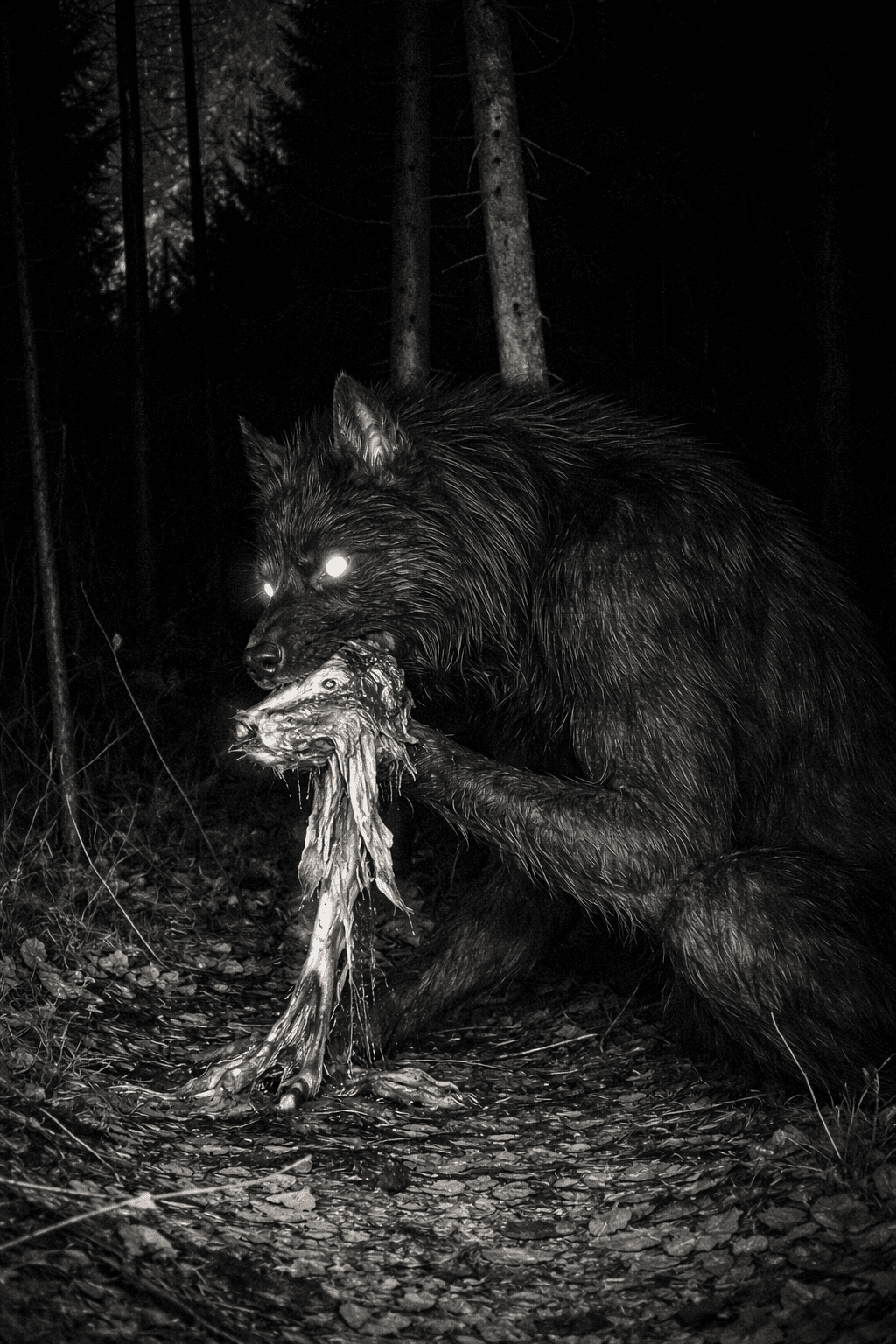
Bipedal wolf-like creature reported across Michigan for decades. Concentrated sightings every seven years.
The Michigan Dogman represents one of America's most enduring cryptid mysteries, with sightings spanning over 130 years. First documented near Wexford County in 1887, witnesses describe a seven-foot-tall bipedal creature with the head of a wolf, muscular human-like torso, and canine legs ending in pawed feet. The entity allegedly walks upright but can drop to all fours for rapid locomotion.
What sets this case apart is the apparent seven-year cycle of increased sightings, particularly around years ending in 7. Radio DJ Steve Cook's 1987 song about the creature unexpectedly triggered a flood of witness reports, suggesting far more encounters than previously documented. Sightings cluster around Michigan's northern forests, particularly the Manistee National Forest region, with witnesses ranging from hunters and campers to law enforcement officers.
Gable Film Footage
Canine Hair Sample Analysis
Cast Footprint Impressions
Audio Recording Analysis
"It was walking on two legs like a man, but it had the head of a dog. When it saw my headlights, it just melted back into the woods."
Fortney, a truck driver with over 20 years experience driving Michigan's back roads, encountered the creature near Luther in 1987. His account gained significant attention when featured on television programs investigating cryptid phenomena. As someone familiar with local wildlife through decades of night driving, Fortney's testimony carries particular weight among researchers. His description of the creature's fluid movement between bipedal and quadrupedal locomotion has become a signature detail in Dogman accounts.
"I've been hunting these woods for forty years, and I know every animal that lives here. This was something else entirely."
Kelley, a retired logger and lifelong Michigan resident, reported his encounter during a 1993 deer hunting expedition in Wexford County. His detailed description of the creature's yellow eyes, silver-tipped fur, and muscular build provided investigators with specific physical characteristics for comparison with other accounts. Kelley's credibility stems from his extensive outdoor experience and his initial reluctance to report the encounter, fearing ridicule from fellow hunters.
SHOW 2 MORE WITNESS STATEMENTS
"It looked right at me with these intelligent eyes, like it was trying to figure out what I was. Then it turned and walked away on two legs, calm as you please."
Martin, a wildlife photographer, encountered the creature while photographing birds in the Manistee National Forest in 2007. Her professional background in animal behavior lends credibility to her detailed observations about the creature's posture and movement patterns. Despite having her camera equipment, Martin reported being too stunned to photograph the encounter, a detail that skeptics cite as suspicious while supporters argue demonstrates genuine shock response.
Context not available - account exists in regional folklore collections but specific quotes are not publicly verified.
Relict Population Theory
Cryptozoologists propose the Michigan Dogman represents a surviving population of dire wolves or an unknown canid species that avoided extinction. This theory, championed by researchers like Linda Godfrey, suggests that Michigan's vast wilderness areas could support small populations of large predators unknown to science.
The bipedal locomotion reported by witnesses might represent an evolutionary adaptation for navigating dense forest undergrowth and snow. Fossil evidence shows that prehistoric North America hosted numerous large canid species, and new species are still being discovered in remote regions worldwide.
However, this theory struggles with the lack of physical evidence - no bones, scat, or hair samples have been scientifically verified. Could a breeding population remain hidden for over a century while leaving no trace?
Interdimensional Entity Hypothesis
Paranormal researchers suggest the Michigan Dogman exists as an interdimensional being that periodically manifests in our reality. This theory attempts to explain the creature's elusive nature and the seven-year appearance cycle, proposing that dimensional barriers weaken at specific intervals.
Proponents like cryptid researcher Nick Redfern argue that the entity's ability to vanish without leaving tracks, its seeming intelligence in avoiding capture, and reports of supernatural abilities point beyond conventional zoology. Some witnesses describe the creature displaying impossible speed or disappearing mid-chase.
Critics rightfully question the lack of scientific basis for interdimensional travel. If such phenomena exist, why would they manifest as wolf-like creatures rather than other forms? The theory raises more questions than answers.
Mass Misidentification Syndrome
Skeptical researchers propose that Michigan Dogman sightings result from systematic misidentification of known animals, particularly black bears standing upright to investigate scents. Wildlife biologist explanations suggest that poor lighting, fear response, and cultural conditioning create a feedback loop of false identifications.
The 1987 radio song phenomenon supports this theory - after Steve Cook's novelty song aired, reports increased dramatically, suggesting media influence on perception. Psychological studies show that expectation strongly influences eyewitness accounts, particularly in high-stress situations.
Yet this explanation struggles with reports from experienced hunters and outdoorsmen who claim intimate familiarity with local wildlife. Can trained observers really mistake a bear for a seven-foot bipedal wolf? Some witness accounts include details that seem difficult to reconcile with misidentification.
Government Hybrid Experiment
Conspiracy theorists propose that the Michigan Dogman represents escaped subjects from classified military genetic experiments conducted during the Cold War era. This theory suggests that government facilities attempted to create super-soldiers by combining human and canine DNA, with some subjects escaping into Michigan's wilderness.
Proponents point to the creature's human-like intelligence reported by witnesses, its bipedal locomotion, and the proximity of some sightings to former military installations. The seven-year cycle might correspond to breeding patterns or periodic releases of new subjects.
However, genetic science in the 1950s-60s lacked the sophistication for such experiments, and no documentation supports military cryptid programs in Michigan. The theory reflects distrust of government more than biological possibility. Would such experiments leave no paper trail or whistleblower testimony after decades?
Shapeshifter Mythology Manifestation
Anthropologists suggest the Michigan Dogman represents a modern manifestation of Native American shapeshifter legends, particularly the Ojibwe windigo traditions. This theory proposes that ancient cultural memories, combined with psychological and social factors, create recurring encounters with archetypal beings.
The Great Lakes region holds deep indigenous traditions of human-animal transformation beings. Some researchers argue that these encounters represent genuine spiritual phenomena that mainstream science cannot measure or understand, while others suggest cultural programming influences perception.
This theory respectfully acknowledges indigenous wisdom while raising questions about the nature of reality itself. If cultural beliefs can manifest physical encounters, what does this suggest about consciousness and perception? The challenge lies in investigating such phenomena without cultural appropriation or dismissing legitimate spiritual traditions.
The Michigan Dogman phenomenon presents compelling testimonial evidence from credible witnesses, but lacks definitive physical proof. The consistency of descriptions across decades and the seven-year pattern suggest either a genuine unknown species or shared cultural mythology. While misidentification explains some reports, the detailed behavioral observations from experienced outdoorsmen and multiple-witness encounters remain difficult to dismiss entirely. The case warrants continued investigation, particularly regarding potential undiscovered large predator species in Michigan's vast wilderness areas.