The Beast of Bray Road: Wisconsin's Werewolf
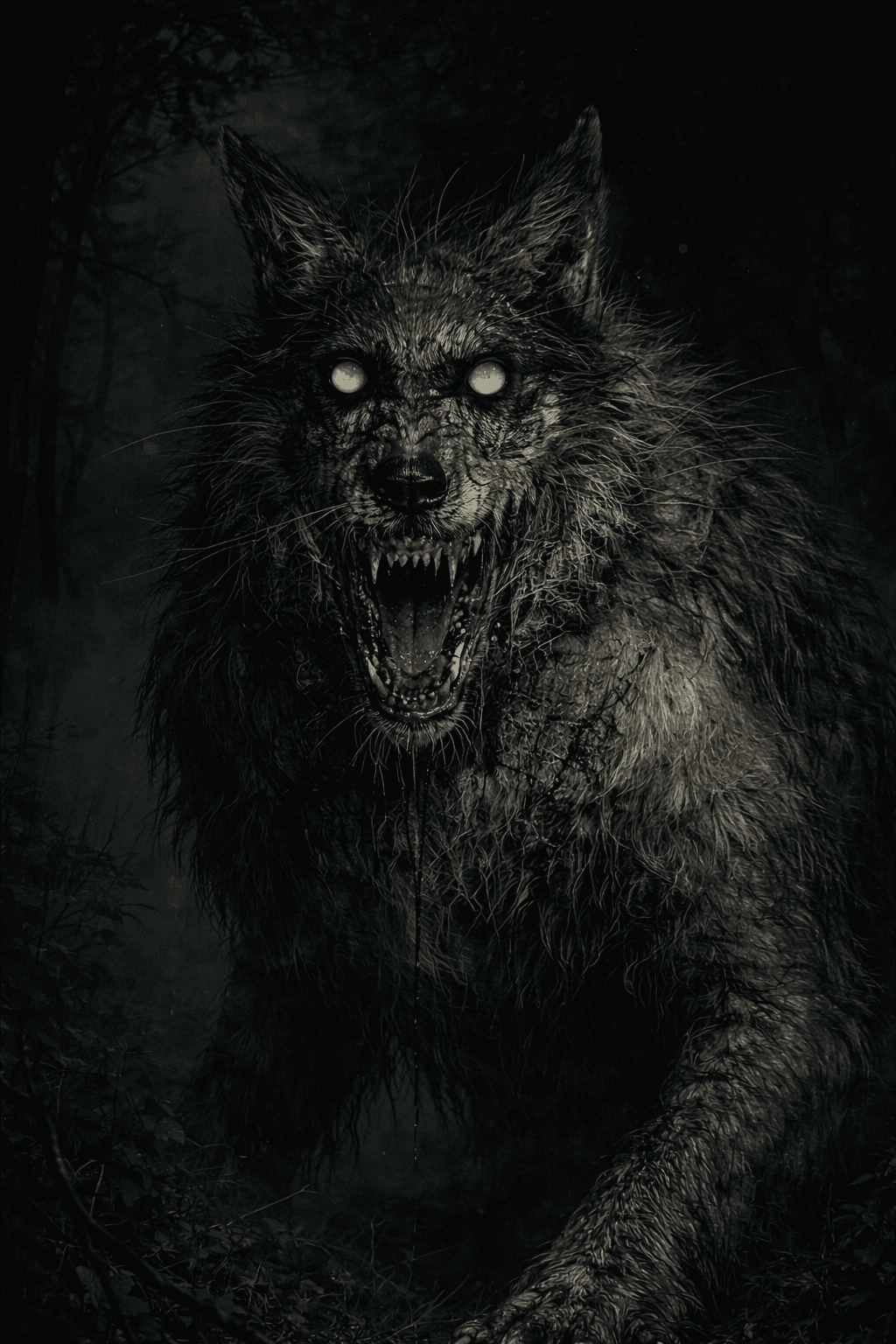
Bipedal wolf-like creature reported along rural Wisconsin road since 1936. Multiple witnesses describe seven-foot tall beast with canine features.
Since 1936, residents along Bray Road in rural Wisconsin have reported encounters with a seven-foot tall, bipedal creature resembling a massive wolf or dog. The beast allegedly possesses glowing yellow eyes, prominent fangs, and coarse dark fur covering its muscular frame. Unlike typical wolf sightings, witnesses consistently describe the creature's ability to walk upright on two legs while maintaining distinctly canine facial features. The phenomenon gained widespread attention in 1989 when local newspaper reporter Linda Godfrey investigated a cluster of sightings. Reports describe aggressive behavior including attacking vehicles, leaving deep claw marks, and emitting terrifying howls. Witnesses range from teenagers to experienced hunters, many reporting the creature's incredible speed and agility. The beast appears most frequently during late evening hours along the wooded stretches of Bray Road, though sightings have expanded to neighboring areas. Despite numerous investigations and media coverage, no physical evidence has definitively proven the creature's existence.
Vehicle Claw Marks
Hair Samples
Paw Print Casts
Audio Recordings
Photographic Evidence
Historical Newspaper Reports
"I could see its face clearly. It had a long snout like a wolf, but it was walking on its hind legs like a man. The eyes glowed yellow in my headlights."
Endrizzi, an 18-year-old college student, encountered the Beast while driving home from her job at a Delavan restaurant on a December evening in 1999. She observed the creature for approximately 30 seconds as it crossed Bray Road about 100 feet ahead of her vehicle. Her detailed description of the creature's bipedal movement, muscular build, and canine facial features became one of the most cited eyewitness accounts. The encounter occurred during clear weather conditions with good visibility from her car's headlights. Endrizzi immediately reported the sighting to local authorities and later provided testimony to journalist Linda Godfrey, becoming a key witness in Beast documentation.
"That thing jumped right onto the hood of my truck. Left claw marks four inches deep in the metal. I've never seen anything like it in my life."
Bray, a 32-year-old construction worker and lifelong Wisconsin resident, experienced a direct confrontation with the Beast while driving home from work in October 1999. His pickup truck was allegedly attacked by the creature, which leaped onto his vehicle's hood and windshield before fleeing into the woods. Despite sharing a surname with the famous road, Scott Bray had no relation to the road's namesake family. He reported significant vehicle damage consistent with large animal claws, though photographs of the damage were never publicly released. Bray's account is particularly notable because it describes aggressive physical interaction rather than passive observation, setting it apart from most other witness reports.
SHOW 2 MORE WITNESS STATEMENTS
"It was crouched over what looked like roadkill. When my headlights hit it, the thing stood up on two legs and looked right at me. Had to be seven feet tall, easy."
Fewless, a veteran security guard with over 15 years of experience working night shifts, encountered the Beast during his patrol route along rural Wisconsin roads in 1989. His professional background in overnight security work gave him extensive experience observing wildlife and unusual activity during nighttime hours. The sighting occurred around 2:00 AM during his routine patrol, lasting approximately 45 seconds before the creature disappeared into dense woods. Fewless's report was among the first investigated by journalist Linda Godfrey, helping establish the creature's reported bipedal characteristics and imposing size. His testimony carries additional weight due to his professional training in observation and reporting unusual incidents.
No verified direct quote available from official records.
Fredrick, a retired Walworth County Sheriff's deputy with 20 years of law enforcement experience, investigated multiple Beast reports during his career and claimed to have observed the creature personally in 2009. His law enforcement background provided credibility to Beast investigations, though he remained cautious about publicly discussing his experiences due to professional reputation concerns. Fredrick reportedly observed unusual animal tracks and disturbances that didn't match known Wisconsin wildlife patterns. His involvement lent official credence to witness testimonies and encouraged other law enforcement personnel to take reports seriously. After retirement, Fredrick occasionally provided consultation to researchers and journalists investigating the Beast phenomenon, though he rarely gave detailed public interviews about his personal encounters.
Misidentified Black Bear
Wildlife experts suggest witnesses may be observing black bears walking upright, a behavior bears exhibit when investigating scents or threats. Poor lighting conditions along wooded Bray Road could distort perception of facial features. However, this theory struggles to explain the consistently reported canine characteristics and aggressive vehicle interactions described by multiple witnesses over decades.
Hybrid Wolf-Dog Escapee
The creature may be an escaped wolf-dog hybrid or exotic canine breed capable of brief bipedal movement. Such animals can grow significantly larger than typical wolves and display unusual behaviors. This would explain the canine features reported by witnesses like Scott Bray and the claw marks on vehicles documented in evidence reports, while accounting for the creature's apparent intelligence and elusiveness.
Unknown Cryptid Species
Cryptozoologists propose the Beast represents an undiscovered bipedal canine species or evolutionary throwback. The consistency of witness descriptions across generations, including specific details reported by Lorianne Endrizzi about muscular build and yellow eyes, suggests a real biological entity rather than folklore. This theory gains support from similar creature reports in other regions worldwide.
Psychological Mass Hysteria
Sociologists suggest the phenomenon represents collective psychological conditioning following Linda Godfrey's initial news coverage. Once the Beast concept entered local consciousness, subsequent witnesses may unconsciously interpret normal wildlife encounters through this lens. However, this theory cannot easily explain pre-1989 historical reports or physical evidence like the vehicle damage documented in witness accounts.
Supernatural Werewolf Entity
Paranormal researchers propose the Beast represents a genuine supernatural werewolf or shapeshifter entity tied to Native American folklore. This theory attempts to explain the creature's apparent immunity to physical harm and ability to disappear without trace, as suggested by encounters described by witnesses like Dennis Fewless. The theory also addresses why no body or definitive physical evidence has ever been recovered despite numerous sightings.
Elaborate Hoax or Local Legend
Skeptics argue the Beast represents an ongoing hoax perpetuated by local residents to generate tourism revenue or media attention. The timing of increased reports following newspaper coverage supports this theory. However, the diversity of witness backgrounds and reports spanning multiple decades, including testimony from credible sources like law enforcement officer Jon Fredrick, complicates simple hoax explanations.
Government Experiment Cover-Up
Conspiracy theorists suggest the Beast represents an escaped military genetic experiment or biological warfare test subject. Wisconsin's proximity to military installations and the creature's reported unusual intelligence and physical capabilities support this theory. Proponents argue government agencies actively suppress evidence to conceal classified research programs, explaining the lack of definitive proof despite consistent witness testimony over decades.
The Beast of Bray Road remains unexplained despite decades of investigation. While witness testimonies show remarkable consistency in describing physical characteristics and behavior, the complete absence of verifiable physical evidence raises questions. The creature's reported bipedal locomotion contradicts known wolf behavior, yet no escaped exotic animals have been documented in the area. Psychological factors, misidentification of known wildlife, and local folklore may contribute to continued sightings. However, the credibility of some witnesses and consistency of reports across different time periods prevents complete dismissal of the phenomenon.