The Axeman of New Orleans
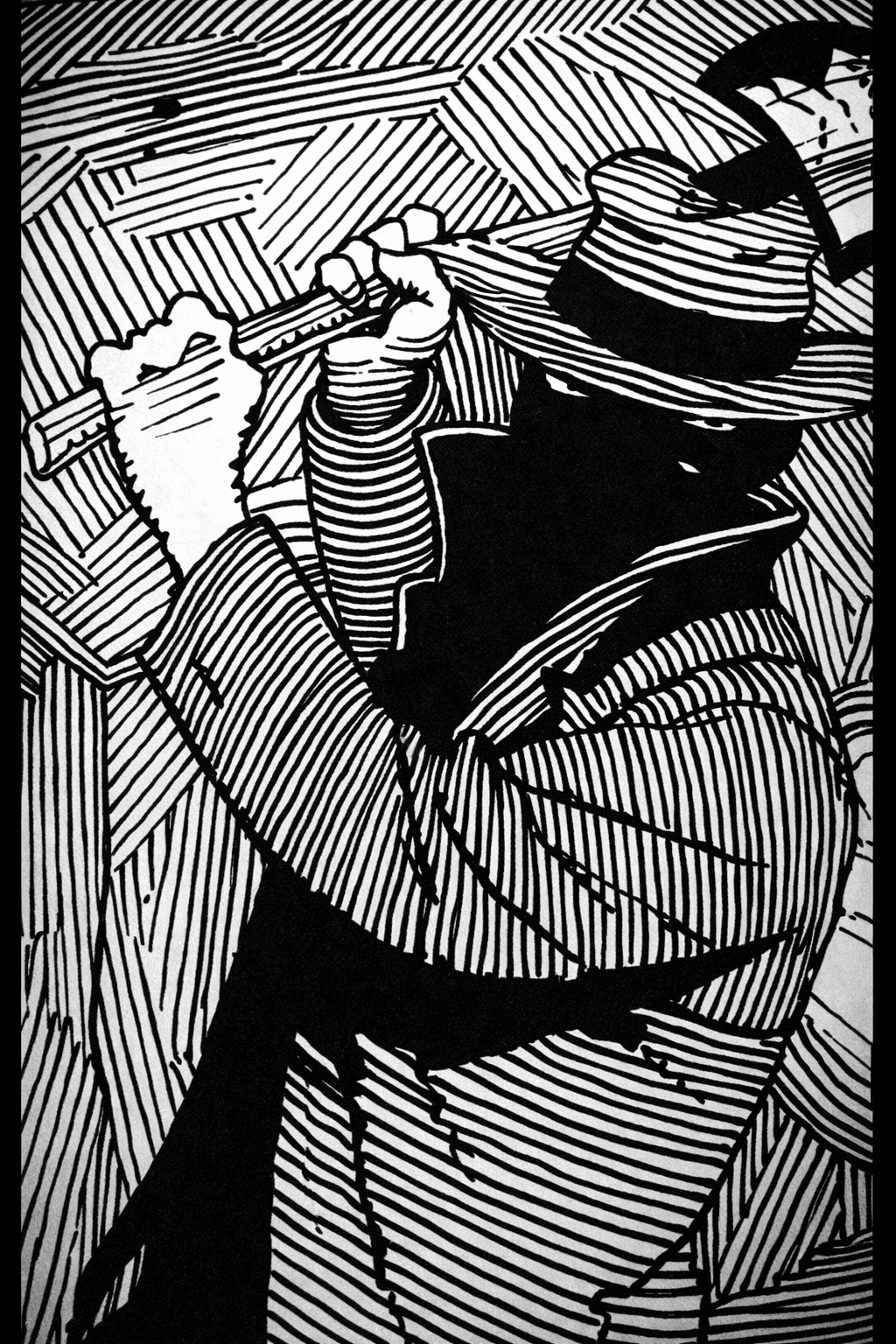
Mysterious serial killer terrorized New Orleans from 1918-1919, targeting Italian grocers with axes. Left cryptic letters claiming to be a demon who spared jazz lovers.
Between May 1918 and October 1919, a mysterious killer stalked New Orleans, wielding an axe against Italian-American grocers and their families. The Axeman never stole anything, instead seeming driven by an inexplicable hatred for Italian immigrants. What made this case truly bizarre was a letter published in newspapers claiming to be from the killer himself, declaring he was a "demon from hell" who would spare anyone playing jazz music on March 19, 1919. That night, New Orleans erupted in jazz performances as terrified residents complied. The murders stopped abruptly after the final attack on October 27, 1919. Despite multiple survivors and witness accounts, the Axeman was never identified or caught, leaving behind one of America's most chilling unsolved serial killer cases.
Physical Evidence: Door Panels and Weapon Analysis
The Hell Demon Letter to New Orleans Newspapers
Police Crime Scene Reports and Survivor Testimonies
Contemporary Newspaper Coverage and Public Response
"I saw him plain as day. He was tall and dark, wearing dark clothes. He raised that axe above his head and brought it down on my husband. I'll never forget his eyes - they were cold, like a devil's eyes."
Rosie Cortimiglia survived the brutal March 10, 1919 attack on her family's grocery store in Gretna, Louisiana. She witnessed the Axeman murder her husband Charles and attack their infant daughter. Despite suffering severe head wounds herself, Cortimiglia provided the most detailed description of the killer to police detectives. Her testimony became crucial evidence, though she later controversially accused innocent neighbors before recanting her accusations on her deathbed years later.
"He was a tall man, very dark. I heard him chopping at the door and when I got up to see what it was, there he was with the axe. I screamed and he hit me, but somehow I lived."
Mary Romano was attacked alongside her husband Tony at their grocery store on May 23, 1918, in one of the Axeman's first documented strikes. Both survived their injuries, making them among the few eyewitnesses who could provide detailed accounts. Mary's description of a tall, dark-complexioned man matched other survivor testimonies. She identified the weapon as her own family's axe, taken from their store's tool area.
SHOW 2 MORE WITNESS STATEMENTS
"I heard someone at our door in the night, chopping. When I looked out, I saw a man running away. He was tall and moved quickly, like he knew exactly where he was going."
Pauline Bruno lived near the Romano grocery store and was awakened by the sounds of the May 23, 1918 attack. As one of the few witnesses to see the Axeman fleeing a crime scene, her testimony provided insights into the killer's escape methods and familiarity with neighborhood layouts. Bruno described the attacker as moving with purpose and confidence, suggesting intimate knowledge of the local streets and alleys.
"I was sleeping when I heard Mrs. Cortimiglia screaming. I ran to help but the man was already gone. All I saw was someone tall running into the darkness."
Iorlando Jordano was a neighbor who responded to screams during the March 10, 1919 Cortimiglia family attack. Despite arriving moments after the assault, he caught a glimpse of the fleeing attacker. Jordano's testimony corroborated other witness descriptions of the killer's height and build. Ironically, he and his father Frank were initially accused by Rosie Cortimiglia of being the attackers, leading to their wrongful conviction before she recanted her testimony.
Anti-Italian Hate Crime Spree
The most straightforward theory suggests the Axeman was motivated by anti-Italian sentiment prevalent during World War I. Italian-Americans faced discrimination and suspicion, with some viewed as potential enemy sympathizers. The killer's exclusive targeting of Italian grocers supports this theory.
Historian William Hair documented the systematic nature of the attacks in his research, noting the killer's knowledge of Italian neighborhoods and business patterns. The lack of robbery suggests ideological rather than financial motivation.
However, this theory struggles to explain the killer's intimate knowledge of his victims' routines, the supernatural claims in the letter, or why the attacks stopped so abruptly. If driven purely by hate, why didn't the killing continue?
Mafia Protection Racket Gone Wrong
Some investigators theorized the Axeman was connected to organized crime, specifically targeting Italian grocers who refused to pay protection money. New Orleans had established Mafia presence, and grocery stores were common extortion targets.
This theory explains the killer's detailed knowledge of victims' homes and schedules. The theatrical letter could have been misdirection to make the crimes appear random rather than calculated hits. The cessation of murders might indicate the message was received.
Yet this theory has significant flaws. Traditional Mafia hits were quick and efficient, not the brutal, prolonged attacks characteristic of the Axeman. The supernatural elements and jazz music demand seem inconsistent with organized crime methodology.
Multiple Copycat Killers
Crime historian Rick Geary proposed that no single "Axeman" existed, but rather multiple killers copying the modus operandi after extensive newspaper coverage. Early attacks inspired imitators who saw an opportunity to commit murder while deflecting suspicion.
This explains inconsistencies in witness descriptions and the varying skill levels displayed in different attacks. Some break-ins were expertly executed while others appeared amateurish. The famous letter could have been written by anyone seeking attention.
The copycat theory accounts for the attack variations but struggles with the consistent targeting of Italian grocers and the unified methodology of door panel removal. Would multiple unconnected killers really follow such specific patterns?
Joseph Mumfre Theory
The most specific theory identifies Joseph Mumfre, a career criminal shot dead by widow Esther Albano in Los Angeles, December 1920. Albano's husband had been an Axeman victim, and she claimed Mumfre was the killer.
Mumfre had connections to New Orleans and was in prison during periods when attacks stopped, then resumed upon his release. His criminal background included burglary and violence. Some investigators found the timeline compelling.
However, concrete evidence linking Mumfre to the crimes remains circumstantial. Witness descriptions varied significantly, and some didn't match Mumfre's appearance. Was Albano's identification reliable, or was she simply seeking someone to blame for her husband's death?
Psychological Profile: The Demon Persona
Modern criminal profilers suggest the Axeman exhibited characteristics of an organized serial killer with possible dissociative identity disorder. The "demon" persona in the letter might reflect genuine psychological delusion rather than mere theatrics.
The killer's ability to plan complex break-ins while claiming supernatural identity suggests someone capable of compartmentalizing reality. The jazz music demand could represent an attempt to exert god-like control over an entire city's behavior.
This psychological framework explains both the methodical planning and bizarre theatrical elements. But it raises new questions: if the killer believed himself demonic, why target only Italians? What triggered the complete cessation of attacks in October 1919?
The Axeman case represents a genuine historical mystery with documented police records and newspaper coverage. While the attacks definitely occurred, the killer's identity remains unknown. The jazz letter adds an element that seems almost too theatrical, leading some to question its authenticity. However, multiple survivors provided consistent descriptions of a tall, dark figure. The sudden cessation of attacks suggests either the killer died, moved away, or was satisfied with the terror achieved. Without DNA evidence or modern forensic techniques available in 1918-1919, this case will likely remain forever unsolved.