The Villisca Axe Murders: America's Most Haunting Unsolved Family Massacre
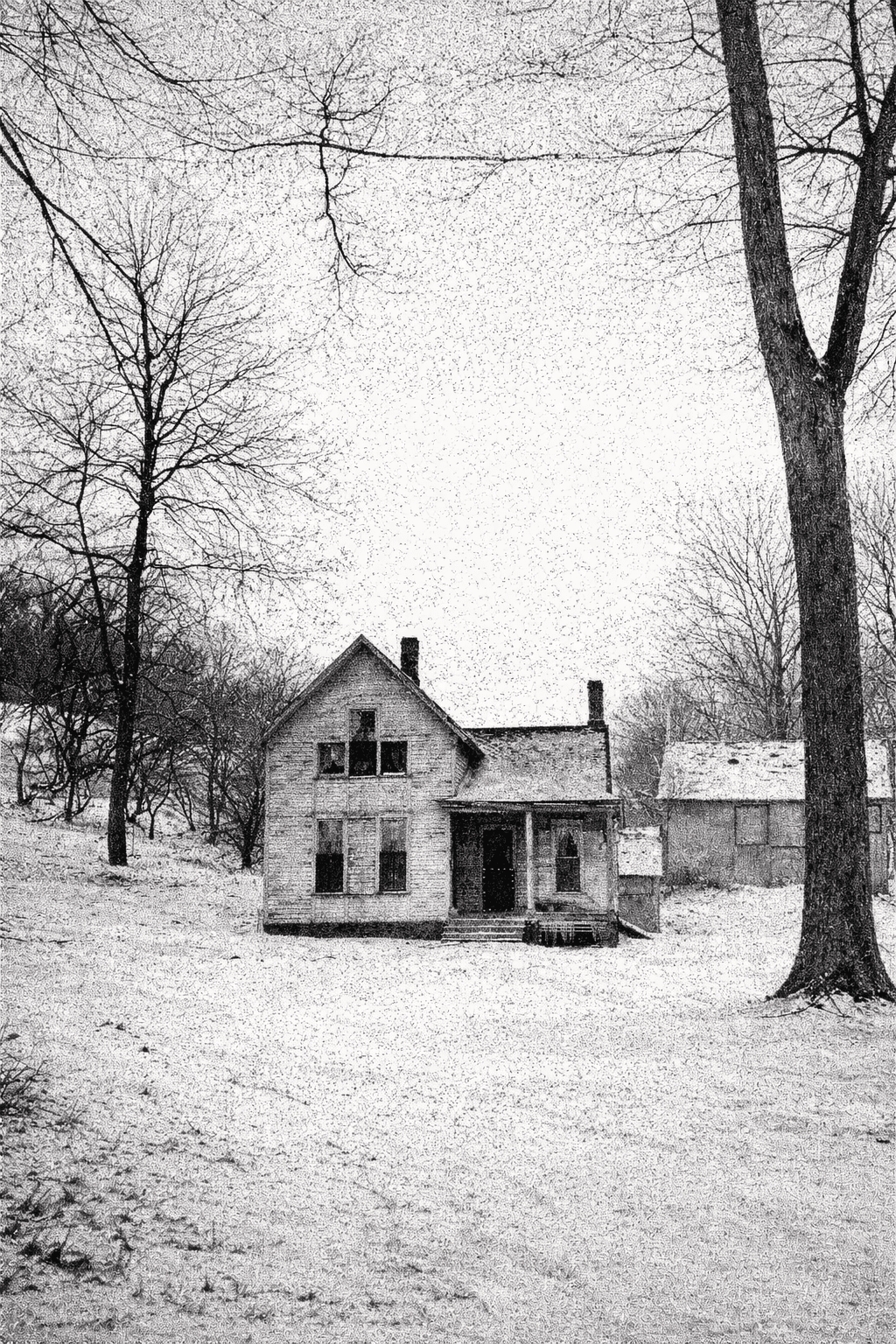
Eight victims brutally murdered with an axe in a small Iowa farmhouse. Over 100 years later, the killer remains unknown.
On the night of June 9, 1912, six members of the Moore family and two overnight guests were brutally murdered with an axe in their Villisca farmhouse. Josiah and Sarah Moore, their four children aged 5-12, and visiting friends Ina and Lena Stillinger were all found dead the next morning. The killer used Josiah's own axe, covering mirrors and windows throughout the house. Despite extensive investigations, multiple suspects, and two hung juries, no one was ever convicted. The case spawned theories ranging from traveling serial killers to local revenge plots. The pristine crime scene preservation and bizarre ritualistic elements - including a slab of bacon left beside the axe - have made this America's most infamous unsolved family massacre. Over 110 years later, the Villisca house still stands as a museum, drawing investigators, paranormal enthusiasts, and tourists seeking answers to one of the Midwest's darkest mysteries.
Original Crime Scene Photographs & Police Reports
Coroner's Inquest Testimony & Autopsy Findings
Reverend Kelly Trial Transcripts & Legal Documents
Midwest Axe Murder Pattern Analysis & Federal Investigation Files
"I knew something was wrong when I didn't see any of the family stirring about, and the house was so quiet. It was past the time when Mrs. Moore always had her washing on the line."
Mary Peckham was the Moore family's next-door neighbor who discovered the bodies on June 10, 1912. As a close family friend who knew the Moores' daily routines intimately, her concern about the unusual quiet led her to investigate when she saw no activity at the house by mid-morning. Her testimony was crucial in establishing the timeline of discovery and the family's normal patterns. Peckham had called out to the house and knocked before eventually opening the door and making the horrific discovery that would shock the nation.
"It was the most horrible sight I have ever seen. The whole family was murdered in the most brutal manner. My brother Josiah and his wife and four children, and two little neighbor girls."
Ross Moore was Josiah Moore's brother and among the first family members to arrive at the scene after Mary Peckham's discovery. As someone who knew the family intimately and had business dealings with Josiah, Ross could immediately assess what was missing or out of place in the house. His testimony was particularly valuable because he could identify that nothing appeared to be stolen despite the house being thoroughly searched. Ross also provided crucial background about family relationships, business disputes, and potential enemies that might have targeted his brother.
SHOW 2 MORE WITNESS STATEMENTS
"I sent my girls over to the Moore house for the night. They were supposed to come home in the morning, but they never did. Now they're both dead with the whole family."
Henry Stillinger was the father of Ina Mae and Lena Gertrude Stillinger, the two houseguests killed alongside the Moore family. His testimony was critical because he confirmed that his daughters' sleepover was a last-minute decision made after the church service on June 9, 1912. This detail supported theories that the killer either had real-time knowledge of the girls' presence or was specifically targeting the Moore family with the sisters becoming unintended victims. Stillinger's account helped establish that very few people would have known the girls were spending the night at the Moore house.
"I left Villisca early that morning because I had business in other towns. I had nothing to do with these terrible murders."
Reverend Kelly was the traveling Presbyterian minister who became the prime suspect in the Villisca murders. He had preached at the Villisca Presbyterian Church on the evening of June 9, 1912, the same service attended by the Moore family and Stillinger sisters. Kelly's nervous behavior and contradictory statements about his hasty departure from Villisca the morning the bodies were discovered made him the focus of investigation. Despite being tried twice for the murders, Kelly maintained his innocence throughout. His defensive testimony and inability to provide solid alibis for the crucial overnight hours kept him under suspicion for years.
The Traveling Preacher Theory
Reverend George Kelly, a traveling Presbyterian minister, emerged as the prime suspect after behaving strangely following the murders. Kelly had preached at the Villisca Presbyterian Church the night before the killings and left town early the next morning. Witnesses reported his nervous demeanor and contradictory statements about his whereabouts.
Kelly was arrested twice and tried twice for the murders. The prosecution argued he harbored resentment toward the Moore family and had opportunity and means. However, both trials ended in hung juries - the first in 1917 resulted in 11-1 for acquittal, the second in 1917 ended 7-5 for conviction.
Critics argue the case against Kelly was circumstantial at best. His strange behavior could be explained by the shock of the brutal murders in a small community where he had just preached. If Kelly was the killer, what specific motive drove a man of God to commit such a methodical massacre?
The Serial Killer Connection
Investigator M.W. McClaughry proposed that the Villisca murders were connected to a series of similar axe murders across the Midwest between 1911-1912. The killer, potentially Henry Lee Moore (no relation to the victims), may have been responsible for murders in Colorado, Kansas, and other Iowa locations using nearly identical methods.
The pattern included families killed with axes in their sleep, mirrors covered, and ritualistic elements left at scenes. In each case, the killer used weapons found at the scene and showed intimate knowledge of the homes' layouts. The "Midwest Axe Murder Series" suddenly stopped after Villisca, suggesting the perpetrator either died, was imprisoned for other crimes, or moved far from the region.
However, definitive forensic connections were impossible with 1912 investigative techniques. Could one man have traveled such distances committing similar crimes, or were these copycat killings inspired by newspaper coverage of earlier murders?
The Local Revenge Theory
Some investigators believed the murders stemmed from local business disputes or personal vendettas within Villisca's tight-knit community. Josiah Moore was a successful implement dealer who had recently left his partnership with Frank Jones to start a competing business, creating significant financial and personal animosity between the former partners.
Jones allegedly harbored deep resentment toward Moore for taking clients and insider knowledge. The theory suggests Jones either committed the murders himself or hired someone familiar with the Moore household. The killer's knowledge of the home's layout and the family's routines points to someone with intimate access to their daily lives.
Yet Jones had a solid alibi and was never seriously pursued as a suspect by investigators. The brutality of the crime - including the murder of innocent children and houseguests - seems disproportionate to a business dispute. Would a prominent local businessman risk everything to settle a commercial disagreement through such savage means?
The Stillinger Sisters Target Theory
A compelling theory suggests the Stillinger sisters - Ina Mae, 8, and Lena Gertrude, 12 - were the primary targets, with the Moore family killed to eliminate witnesses. The girls were last-minute overnight guests who weren't originally planned to stay at the Moore house that night, making their presence unexpected and unplanned.
Investigators noted that Lena Stillinger's body showed different positioning and potential evidence of sexual assault, unlike the other victims who appeared to have been killed quickly in their sleep. This suggests the killer may have had a specific interest in one or both girls, with the family murders serving as cover for the true motive.
The theory is supported by the fact that the girls' parents hadn't initially planned for them to sleep over, meaning only someone with real-time knowledge of their last-minute decision would have known to find them at the Moore house. However, why would someone commit such an elaborate massacre instead of waiting for an opportunity when the girls were alone or more vulnerable?
The Ritualistic Killer Theory
The methodical covering of mirrors throughout the house, placement of clothing over windows, and the bizarre detail of a slab of bacon left next to the murder weapon suggest a killer driven by ritualistic compulsions rather than simple rage or revenge. Each mirror in the house was covered with clothing, and all windows were obscured, creating a tomb-like environment.
Criminologists have noted similarities to ritualistic behaviors seen in cases involving mentally disturbed individuals with specific compulsions or religious delusions. The covering of mirrors is particularly significant in various cultural and religious contexts, suggesting the killer may have believed in supernatural consequences of his actions or sought to prevent the victims' spirits from witnessing the murders.
The bacon placement remains one of the most puzzling elements - some theorists suggest it was a signature or calling card, while others believe it held religious or symbolic significance to the killer. Modern criminal profiling might categorize this as an organized killer with specific psychological compulsions, but what drove someone to develop such elaborate and specific ritualistic behaviors around mass murder?
After over a century of investigation, the Villisca Axe Murders remain one of America's most perplexing cold cases. While several suspects emerged - including traveling preacher Reverend George Kelly and suspected serial killer Henry Lee Moore - conclusive evidence was never established. Two separate trials of Reverend Kelly ended in hung juries. The methodical nature of the murders, ritualistic covering of mirrors, and lack of robbery motive suggest a calculated killer with personal knowledge of the family. Modern forensic techniques could potentially solve the case, but degraded evidence and the passage of time make resolution unlikely.